Thursday, June 28, 2018

The 47 Best Players from the 1998 Chicago Cubs - #31 Mike Morgan

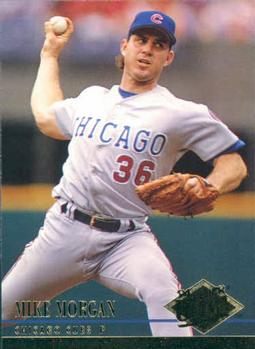
31. Mike Morgan
Mike Morgan may not go down as an incredible baseball player, but he had an incredible career. He was drafted out of high school fourth overall, and he was in the major leagues later that year. He would go on to pitch 22 seasons in the major leagues, although it took him 25 years as he spent some of his early years strictly playing in the minors. Now his numbers were pedestrian for nearly the entirety of his career, but pitching over four separate decades is beyond incredible.

During his time, he pitched for 12 different teams, but the Cubs got more of his time than any other team as he spent five separate seasons with the team. His original run went from 1992-1995 before the Cubs traded him to the St. Louis Cardinals for Todd Zeile.

In 1998, the Cubs were in the hunt, but the trade deadline had come and gone with the Cubs still not solving their pitching issues. At least this time, they were looking to solve for starting pitching instead of relief. Luckily, players could still be traded if they passed through waivers. So the Cubs sent Scott Downs to the Minnesota Twins in exchange for 38-year-old, Mike Morgan. Morgan was having one of his best years as he had a 3.49 ERA in 98 innings as a starter. More incredibly, despite starting 17 games, his record was just 4-2. That level of no-decisions is amazing.

Morgan would start five times for the Cubs down the stretch and put up an ERA of 7.15. The Cubs record in those games? 4-1, somehow. Every game but one of those was decided by a single run. The game that wasn't ended on a 3-run walk-off home run. His best outing was when he pitched six innings and gave up just two runs to the St. Louis Cardinals. It was the only game the Cubs lost. Baseball is weird.

He would move on to the bullpen during the playoffs where he had two scoreless appearances where he was trusted to finish out those games. Yes, they were both losses (they were all losses), but at least Morgan got some time out there. It took him 20 years, but he finally was able to pitch in a playoff game.

Morgan would go on to pitch four more years with the highlight of winning a World Series Championship with the Arizona Diamondbacks in 2001. I guess good things do happen to those who wait.

In case you missed it:
Introduction
#47 - Matt Karchner
#46 - Jose Nieves
#45 - Rodney Myers
#44 - Justin Speier
#43 - Tony Fossas
#42 - Kennie Steenstra
#41 - Chris Haney
#40 - Bob Patterson

#39 - Pedro Valdes

#38 - Derrick White
#37 - Ben Van Ryn
#36 - Terrell Lowery
#35 - Don Wengert

#34 - Kurt Miller

#33 - Jason Maxwell

#32 - Kevin Foster

Wednesday, June 27, 2018

The 47 Best Players from the 1998 Chicago Cubs - #32 Kevin Foster

32. Kevin Foster
This is one where 1998 contributions get a little fuzzy. Since I'm not actually judging based on performance but how they made me feel, it's impossible for me to not include feelings that carried over from past seasons. Kevin Foster, based on 1998, could have arguably been ranked last on this list. Instead, he's much higher, because I really freaking liked Kevin Foster.

Foster was originally drafted by the Montreal Expos as an infielder. He struggled for three years at the plate before the Expos decided to see if he could make it as a pitcher. Although the transition started off a little rough, by his second year on the mound, Foster showed his potential with a  2.74 ERA and over a strikeout per inning in A-ball.

After that, he progressed through the minors, got traded to the Mariners and then to the Phillies who he made a couple appearances for at the end of the the 1993 season and put up a 14.85 ERA. That was enough for the Phillies to trade him to the Cubs in exchange for Shawn Boskie.

In 1994, this trade looked like a massive steal for the Cubs. He came up on June 3rd and threw seven shutout innings against the Expos, who were really freaking good that year. His ERA would never rise above 3.15 and would end that year at 2.89 when the strike cut short the season. He had 8.3 strikeouts per inning, which may not sound too impressive these days but would have eighth in the major leagues if he had enough innings to qualify, just two spots behind a little pitcher from Montreal named Pedro Martinez.

But that would go down as his best season. After that, Foster was plagued with the long ball as his home run rate over doubled the following season, and he would lead the league in home runs allowed. He still had a acceptable 4.51 ERA. The wheels came off in 1996 when he put up an ERA over 6.00, but he bounced back a little in 1997 with a 4.61 ERA.

In 1998, he started the year off in the minor leagues but was called up before a June 9th game to try to help out the bullpen. It did not work out as he gave up two runs in two innings in his first outing. He bounced back for a scoreless outing his second time on the mound, and everything fell apart for him in the third outing as he gave up four hits without recording an out and all four runners would go on to score. The Cubs sent him down to AAA after that, but even there he couldn't put things back together as he had an ERA over 6.00. He would not see the Major Leagues for another three years when he got a brief chance with the Texas Rangers, and then would go on to play a couple years in independent ball before calling it quits.

Unfortunately, the story gets sadder from there. Kevin Foster was diagnosed with renal cancer and passed away in 2008 at the age of 39.

Kevin Foster was a fun guy to watch, and he always flashed just enough that you thought the magic of that 1994 season might come back at any time. In the 1990s, all Cubs fans had was hope, and Foster gave us a reason that a brighter future was attainable. He may have not been the guy in 1998, but he showed enough before that to keep us hanging on to hope for a brighter future, and for that, I will never forget his contributions to the team.

In case you missed it:
Introduction
#47 - Matt Karchner
#46 - Jose Nieves
#45 - Rodney Myers
#44 - Justin Speier
#43 - Tony Fossas
#42 - Kennie Steenstra
#41 - Chris Haney
#40 - Bob Patterson

#39 - Pedro Valdes

#38 - Derrick White
#37 - Ben Van Ryn
#36 - Terrell Lowery
#35 - Don Wengert

#34 - Kurt Miller

#33 - Jason Maxwell

Tuesday, June 26, 2018

The 47 Best Players from the 1998 Chicago Cubs - #33 Jason Maxwell

33. Jason Maxwell
I know what you're thinking, how can the Cubs best hitter from 1998 be ranked this low? The numbers don't lie, and with a slash line of .333/.333/1.333, he was undeniably the Cubs best hitter. Could you squabble with the lack of walks? Sure, but if pitchers were dumb enough to pitch to him, Maxwell really had no choice but to make them pay. Even though he is ranked low, I am going to honor him by breaking down each of his at bats from the 1998 season.

On September 1, in his major league debut, Maxwell came off the bench to pinch hit for Dave Stevens against the Cincinnati Reds. The world did not make it easy on him as he had to go up against Steve Parris in his prime. As badly as Maxwell wanted it, Parris would not let him have it, and our hero went down swinging.

After that first at bat, Maxwell had to be anxious to prove himself. He got his chance on September 6 against the Pittsburgh Pirates. He had to go up against Chris Peters, who was having himself a career year for the Bucs. There were two outs and runners on second and third when Maxwell came in to pinch hit for Don Wengert. He came up to the plate, steadied himself, and swung through strike three from Chris Peters.

After a rough start to his career in those two at bats, it would be understandable if he was shaken, but Maxwell just stirred with intensity. Finally, on September 11, 1998, a day that will live in infamy, Maxwell would get his chance to shine, but it would be against arguably his toughest test to date, one of the greatest prospects in New York Mets history, Bill Pulsipher. Pulsipher had gotten older but most certainly wiser and was now a member of the Milwaukee Brewers. After Manny Alexander popped out, and Scott Servais hit a double, Jim Riggleman took out Felix Heredia and put in Jason Maxwell as the pinch hitter in the fourth inning. Bill Pulsipher was throwing some of the nastiest pitches you have ever seen, but Maxwell continued to battle. Finally, Maxwell took a mighty swing, and unlike his first two tries, this one connected. The ball sailed high...and far...and GONE for a two run home run. He rounded the bases, trying to hide the smile that was bursting from his insides. As he stepped on home plate, he was congratulated by Scott Servais and Lance Johnson, and then he jogged to the dugout like he had done it hundreds of times before. He knew he would have plenty more opportunities to celebrate.

He would never bat for the Cubs again.

After this, Maxwell was resigned to a few pinch running opportunities but nothing more as he was just a September callup with rosters expanding. He later played a couple years with the Minnesota Twins, and most importantly, he clearly updated his own Wikipedia page.
Maxwell's favorite memories on his MLB career were interacting with his fans. He had a large following that was lead from a group of guys out of Swanton Ohio. He would often spend time with the guys after the games signing autographs for these kids. He donated bats, batting gloves, and even his belt with them.
Missing on that Wikipedia page is that he ended the year with one of the all-time great Cubs stat lines, and nothing will ever change that.

In case you missed it:
Introduction
#47 - Matt Karchner
#46 - Jose Nieves
#45 - Rodney Myers
#44 - Justin Speier
#43 - Tony Fossas
#42 - Kennie Steenstra
#41 - Chris Haney
#40 - Bob Patterson

#39 - Pedro Valdes

#38 - Derrick White
#37 - Ben Van Ryn
#36 - Terrell Lowery

#35 - Don Wengert

#34 - Kurt Miller

Thursday, June 21, 2018

The 47 Best Players from the 1998 Chicago Cubs - #34 Kurt Miller

34. Kurt Miller
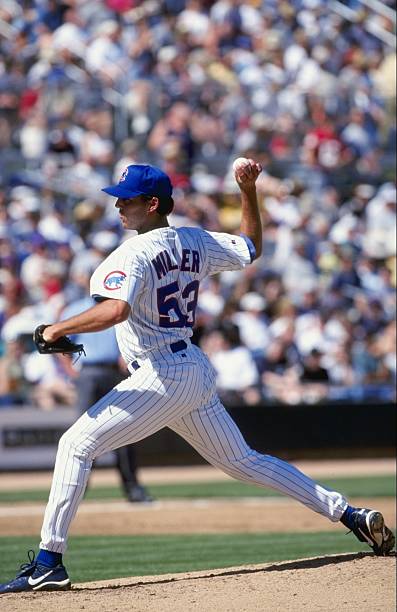
Kurt Miller was supposed to be a big deal. This is a man drafted fifth overall by the Pittsburgh Pirates. His career started off well as he performed well in the lower levels of minor league baseball. He was good enough to be traded for Steve Buechele, and that ain't nothing to sneeze at. He was able to make his major league debut at the age of 21 with the Marlins. Unfortunately, the major leagues seemed to be a code that he couldn't crack. The Marlins traded him to the Cubs for nothing before the 1998 season. And that's where things get interesting.

Kurt Miller's 1998 season for the Chicago Cubs was nothing short of incredible. Let's take a quick look at his ERA in each of his years in the majors.

8.10
DNP
6.80
9.82
0.00
18.00

Oh yeah, 1998 was a magical year. Miller went 14-3 for the Iowa Cubs that year to earn a September callup to Chicago. In three appearances, Miller went four innings, had six strikeouts, while giving up zero walks and zero runs. This was not smoke and mirrors as his FIP was 0.14.

And he didn't just do this against chumps. I mean, Miller was able to take out both Aaron and Bret Boone in the SAME inning. His relief work was a boon for the Cubs who were in desperate need of bullpen help.

But as good as Miller's stats were, his most important stat was 0-3, and that was the Cubs record in games where Miller pitched. Now a lot of nerds will tell you that reliever win percentage is not a thing, but Jim Riggleman and I know better. Sure, Miller was never put in a game where the Cubs were losing by any less than four runs, but a reliever's job is not only to get outs, it is to inspire his teammates, and that is where Miller fell short.

So it was no surprise that despite Miller's statistical superiority in many categories, Riggleman left him off the playoff roster.

Although he started the year in the big leagues for the Cubs, poor performance and a rib injury got him sent down and eventually he was allowed to play in Japan where he struggled for a couple years before retiring in 2000.

Kurt Miller did not have a long run in 1998, but he did the best job possible in that limited time. Sure, any hope for the future turned out to be misguided, but the 1998 Chicago Cubs were a team built on hope and Miller only added to Cubs' fans optimism.

In case you missed it:
Introduction
#47 - Matt Karchner
#46 - Jose Nieves
#45 - Rodney Myers
#44 - Justin Speier
#43 - Tony Fossas
#42 - Kennie Steenstra
#41 - Chris Haney
#40 - Bob Patterson

#39 - Pedro Valdes

#38 - Derrick White
#37 - Ben Van Ryn

#36 - Terrell Lowery

#35 - Don Wengert

Wednesday, June 20, 2018

The 47 Best Players from the 1998 Chicago Cubs - #35 Don Wengert

35. Don Wengert
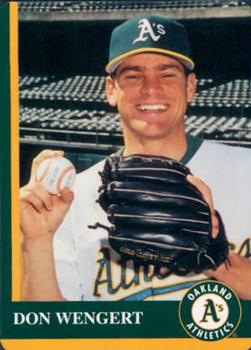
As a fellow, Iowan, I want to show love for Don Wengert. Unfortunately, we have some major issues. He went to an inferior school in Iowa State University, and during his final year there, he managed to add 10 MPH to his fastball. Did he introduce Sammy Sosa to steroids? It's impossible to say, but the answer is yes.

Wengert did not start 1998 with the Chicago Cubs as he was toiling away with the San Diego Padres. But about a month and a half into that season, the Cubs traded Ben Van Ryn to the San Diego Padres in order to get Wengert on the team. Was this a wise move by the Cubs? Well, his ERA 5.93 at the time, so it didn't seem like a great decision. And it wasn't based on past performance as his ERA was over 6.00 in 1997 with the Athletics. Still, the Cubs traded for him, and at that time, it was IJHWT, In Jim Hendry We Trust.

Wengert became the Cubs "Break in case of emergency" pitcher. As you can probably tell from all of the pitchers that I have already covered, there were a whole lot of emergencies that year. Unfortunately, he didn't actually solve the emergenciesHe was so bad at first that the Cubs couldn't even handle it. After three appearances where he gave up at least one run each time out, the Cubs sent him to Iowa to figure things out. He came back up two months later, and Don Wengert raised his level to be exactly who you would have though he could be, getting to a 4.91 ERA when the Cubs made a curious decision.

The Cubs were so desperate for starting pitching that they decided to put Wengert in the rotation. Although he wasn't outrageously bad, the Cubs were 1-5 in games that he started, with his only win being a game against the Diamondbacks, where Cubs' rogue agent, Amaury Telemaco purposely pitched poorly to help out his former team.

After that, he went back to the bullpen where his ERA rose slightly to 5.07 to end the year, although due to those starts, he did pitch an astonishingly high 49.2 innings in 1998.. After that, he had short stints with the Royals, Braves, and Pirates before hanging it up after a 2002 season where he spent the entirety plugging away at Triple-A. He immediately transitioned to being a sales rep for Pfizer, a pharmaceutical company. What a coincidence.

In case you missed it:
Introduction
#47 - Matt Karchner
#46 - Jose Nieves
#45 - Rodney Myers
#44 - Justin Speier
#43 - Tony Fossas
#42 - Kennie Steenstra
#41 - Chris Haney
#40 - Bob Patterson

#39 - Pedro Valdes

#38 - Derrick White

#37 - Ben Van Ryn

#36 - Terrell Lowery

Tuesday, June 19, 2018

The 47 Best Players from the 1998 Chicago Cubs - #36 Terrell Lowery

36. Terrell Lowery
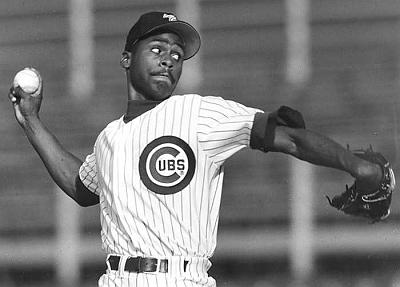
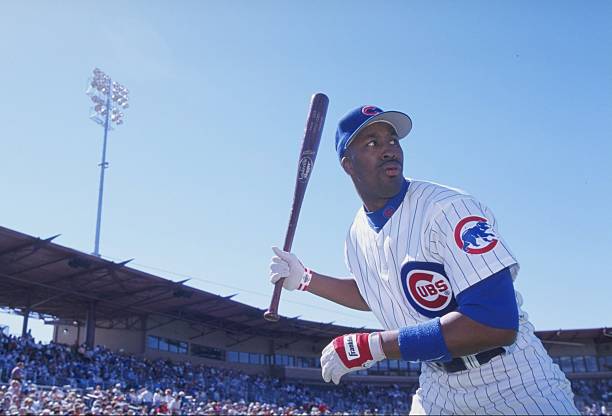
Terrell Lowery may be the greatest athlete on this entire list. He played D-1 college basketball for Loyola Marymount which may not sound impressive at first glance. But this isn't the Loyola you know today. It was the Loyola that was led by Paul Westhead to have the most explosive offense in the nation. In fact, Lowery averaged 28.5 and 26.0 points per game in his final two seasons for the team. That is so many points that I checked, re-checked, and then triple checked that this guy decided to play baseball instead of sticking with basketball.

But, sure enough, he became a pro baseball player as he was drafted in the second round by the Texas Rangers. He bounced around to the Mets before the Cubs selected him in the Rule 5 draft in 1996. He got his first major league experience in 1997 with limited action with the Cubs after tearing up AAA with the Iowa Cubs.

In 1998, he again tore up AAA, but it was tough to break through in the outfield for a Cubs team that was absolutely loaded out there. He played in 24 games but mostly as a defensive replacement as he only had 15 at bats during that time. In the two games that Lowery started, the Cubs were undefeated, taking out the Braves and White Sox in his starts. In games where Lowery got a hit, they were 3-0. In fact, he received at bats in nine games, and the Cubs went 8-1 in those games. Just Lowery playing was enough to put them at 17-7. He was the good luck charm.

Unfortunately, the Cubs weren't aware of good luck charm analytics back then, and he was sent back down after their game on July 4th (Cubs won, of course). He would become a free agent and join the expansion Tampa Bay Devil Rays for their second year of existence. In 2000, he joined the San Francisco Giants, where he had a slash line of .441/.548/.647 for an 1.195 OPS which would have led the major leagues had he qualified.

And after that performance, he never saw another major league at bat. Lowery had a short but fascinating career, and the good luck he brought to the Cubs will never be forgotten.

In case you missed it:
Introduction
#47 - Matt Karchner
#46 - Jose Nieves
#45 - Rodney Myers
#44 - Justin Speier
#43 - Tony Fossas
#42 - Kennie Steenstra
#41 - Chris Haney
#40 - Bob Patterson

#39 - Pedro Valdes

#38 - Derrick White

#37 - Ben Van Ryn

Friday, June 15, 2018

The Hypocrisy of NFL Discipline

Below is a post from Lukewarm Jonah.

************

Adam “Pacman” Jones has been arrested ten times.  He started a fight in a strip club by assaulting a stripper which left a bouncer paralyzed when he was shot by someone in Jones’ crew.  He was most recently arrested in January of 2017 for disorderly conduct, obstructing official business, assault, and a felony charge of harassment with a bodily substance.  He started nine games for the Cincinnati Bengals this previous season.

Kenny Britt has been arrested seven times.  In 2011 he lead police on a car chase in New Jersey.  He also has charges of resisting arrest, drug charges, and DUI.  He was also benched for being a negative influence on his teammates in Cleveland.  He is under contract with the New England Patriots for the upcoming season.

Greg Hardy was found guilty of assaulting a female and communicating threats in 2014.  He reportedly threw his ex-girlfriend into furniture, strangling her and threatening to kill her.  After he lost a bench trial he requested a trial by jury and the woman stopped cooperating with police.  The charges were eventually dropped.  Though he only played in one game in 2014, he collected his salary while not playing.  In 2015 he signed an 11 million dollar one year deal with the Dallas Cowboys.  He was suspended for four games that season.  In 2016 he was arrested for cocaine possession.  He just signed with the UFC.

2016 NFL Hall of Fame inductee Marvin Harrison was heavily implicated in a shooting in 2008.  A rare gun he owned was used in a shooting that hit two people at his car wash.  One of the people shot was someone Harrison had been fighting with minutes earlier named Dwight Dixon.  The other was an eye witness named Robert Nixon who was hit by accident and later named Harrison as the shooter.  In 2009 Dixon was murdered in front of a bar that Harrison owned.  His security cameras went blank for three minutes when the shooting happened.  It is alleged that Harrison’s cousin carried out the murder.

2018 NFL Hall of Fame Inductee Ray Lewis’ two friends allegedly stabbed and killed two other men.  Afterwards they hopped in a limo and took off with Lewis and others.  Lewis’ blood stained clothes he was wearing have never been found.  Witnesses initially reported Lewis was involved in the fight where two men were murdered, but changed their stories when the trial came around for some reason, possibly massive amounts of money.  I had to say allegedly earlier because Lewis’ two friends were eventually found not guilty for some reason, possibly massive amounts of money.  He played for 13 more years after pleading guilty to obstruction of justice.

Michael Vick pleaded guilty to federal felony dogfighting conspiracy in 2007.  He ran and financed a dog fighting organization.  It was reported he personally murdered dogs by hanging, electrocution and drowning.    After his release from prison he rejoined the NFL in 2009 and played seven more seasons, starting games every year.  Nike also resigned Vick to an endorsement deal in 2014.  In more humorous than dog murder charges, Vick also gave women herpes while using the name Ron Mexico.

Oakland Raiders cornerback Sean Smith was charged with felony assault for a vicious beating that caused permanent brain damage to the victim in August of 2017.  He played 14 games in the 2017 season.  He was sentenced after the season was over to one year in jail.

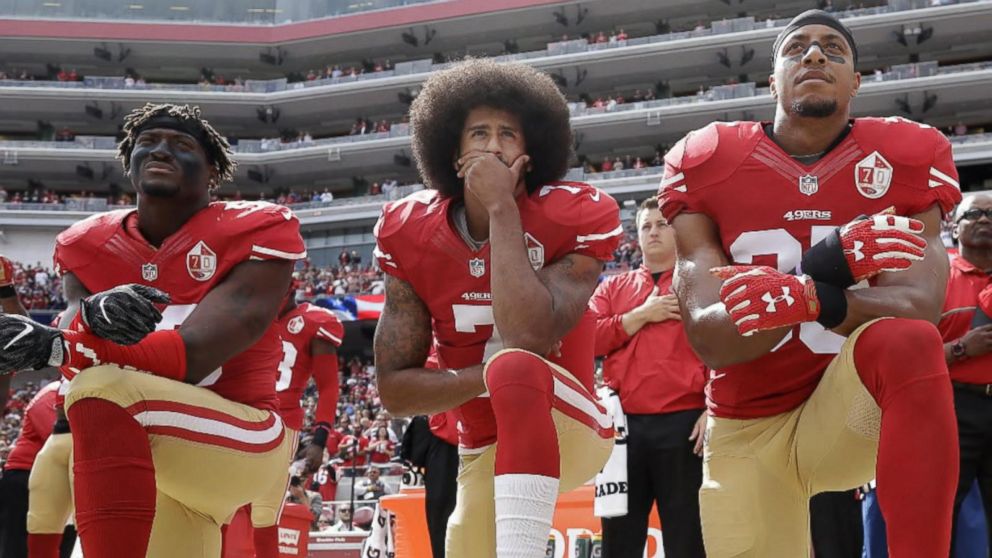
These are just some of the well known cases in the NFL’s recent history.  There were 37 arrests last year and 17 so far this year.  A piece of advice to NFL players, just make sure not to peacefully protest, then you might actually get in trouble.

Thursday, June 14, 2018

The 47 Best Players on the 1998 Chicago Cubs - #37 Ben Van Ryn

37. Ben Van Ryn
On a per-inning basis, Ben Van Ryn may have been one of the Cubs three best relievers in 1998. Outside of a game in 1996, 1998 was the only season that Van Ryn spent in the major leagues, and even then, he didn't make it the entire year. But at the beginning of 1998, pitching low leverage innings for the Chicago Cubs, Ben Van Ryn was straight fire.

Ben Van Ryn started off the year making eight separate appearances and gave up a total of zero earned runs. It seemed as if no one could score on Van Ryn. Sure, those eight appearances only totaled six innings, and two of those outings ended without him getting a single out, but they were still scoreless.

After going all of March (one game) and most of April, Van Ryn was finally solved by the Los Angeles Dodgers. The Dodgers had already put up nine runs on the collection of Kerry Wood and Amaury Telemaco, so the Cubs turned to Van Ryn to stop the bleeding. In fact, they even subbed Van Ryn in for Sammy Sosa, because Jim Riggleman LOVED double switches. Going through these box scores has truly been an incredible experience to see how many double switches the Cubs made that year. Anyway, Van Ryn in for Sosa, but not even Van Ryn could stop the red hot bats of Todd Zeile, Jose Vizcaino, and Matt Luke. The Dodgers exploded for three runs and ended Van Ryn's scoreless streak.

The Cubs apparently had incredibly high standards for their bullpen as Van Ryn would never pitch for the Cubs again. Just 11 days later, they would trade him to the Padres in exchange for Don Wengert. 24 days after being traded, the Padres released Van Ryn who put up a 10.13 ERA for San Diego. The Blue Jays picked him up but quickly realized that it was a bad idea when he put up a 9.00 ERA. He would never pitch in the major leagues again.

But for the beginning of 1998, Van Ryn was pretty dang good, putting up a 3.38 ERA in eight innings for the Cubs, good enough for the fourth best ERA on the team. BVR? More like DVR, because this guy was must see TV.

In case you missed it:
Introduction
#47 - Matt Karchner
#46 - Jose Nieves
#45 - Rodney Myers
#44 - Justin Speier
#43 - Tony Fossas
#42 - Kennie Steenstra
#41 - Chris Haney
#40 - Bob Patterson

#39 - Pedro Valdes

#38 - Derrick White