Showing posts with label Giants. Show all posts

Wednesday, May 27, 2020

XFALpha Breaks Down the NFC East Draft

Another week and another division goes by as we go deep on the NFC East Draft. Also, we go over our top-10 two-sport athletes of all-time, and I make two controversial cases, although I stand by both of them. Finally, we end the episode with Jonah's 26-30th best states, and his list continues to be garbage, but at least I got to talk about a state that is near and dear to my heart.

DOWNLOAD HERE:


Reach out to us at the following places:
Email: xfalphapod@gmail.com 
Twitter:  @XFAlphaPod
Instagram: https://www.instagram.com/xfalpha/

LeBron saying he would have liked to play for the Cowboys.
Two-sport athlete 
Must have gone pro or pro equivalent (Olympics, world championships, etc.). Just college doesn’t count - sorry, Jim Brown.
Two sports must be distinct
Michael Phelps doing freestyle and backstroke doesn’t count. And neither does Henry Cejudo winning a gold medal in wrestling and two UFC belts. Finally, sprinting does not count as a second sport.
More important to excel in two sports than just dominate in one and dabble in another so Walter Payton’s single Trans-Am race does not put him on this list for two-sport greatness.
Finally, and maybe most disappointingly, pro wrestling does not count as a second sport

  1. Deion Sanders - Maybe the greatest cornerback ever. Also, his baseball career was pretty damn impressive for a part-timer. In basically half a season worth of at bats, he led the league in triples with 14. He also nearly slugged .500 that season so it’s not like he was a total slap hitter.
  2. Stephen Neal - World Champion Heavyweight Wrestler in 1999 and nine years as an above average guard. Also had a 27 yard kickoff return.
  3. Herschel Walker - Three-sport athlete with MMA and olympic-level bobsled in 1992. He was so good for the Cowboys that the Vikings decided to build a dynasty for Dallas in order to get him.
  4. Bo Jackson - Baseball and football - not enough of a track record - Never had 1000 yards and his highest touchdown total was 5. He retired when he was 28, Barry Sanders was 30. People always wonder what Bo could have done if healthy, but it was more what Bo could have done had he had a normal path to the NFL and not held out so he didn’t have to play for the Bucs. Good baseball player but struggled with average due to high strikeouts.
  5. Brian Jordan - three years with the Falcons and a really good baseball player with a fifteen year career. 
  6. Carlton Haselrig - All-pro offesnive lineman, 3-time NCAA Champion and competed internationally but his only real success was at the junior level so he switched to football instead of trying to topple Bruce Baumgartner.
  7. Ed Too Tall Jones - Hall of Fame defensive lineman and 6-0 as a boxer.but only fought one legit opponent who may have knocked him out had he not gotten ammonia after being knocked to the mat. Beat up five cans.
  8. Danny Ainge - Three-year baseball career along with 15 years in basketball.
  9. Marquise Goodwin - Olympic long jumper / NFL Wide Receiver. 
  10. Tom Candiotti - Hall of Fame bowler (celebrity wing) and knuckleball pitcher
Jim Thorpe - anybody could play pro football back then, and his Olympics win, although impressive was against 28 nations, and like a quarter of the athletes were from Sweden. 
Babe Didrikson Zaharias - Again, lack of competition, also I’m not going to call golf a sport.


NFC East
Dallas - Damnit, it’s great
1st Round - CeeDee Lamb - Lamb gets a ton of DeAndre Hopkins comparisons, which I think is a tad lofty, but most had him as the best receiver in the class, and they not only were able to get him but prevent a division rival that badly needed receiving help from getting him. He averaged over 20 yards per catch and had 14 touchdowns so there’s a lot to like there.
2nd Round - Trevon Diggs - I like him, Jonah loves him. Big and fast at cornerback and good enough to play for Alabama.
3rd Round - Neville Gallimore - Big name defensive tackle from Oklahoma who didn’t really produce much and isn’t that great of an athlete. I don’t see him making a big impact. 
4th Round - Tyler Biadasz - Offensive lineman from Wisconsin, usually a pretty good decision.
5th Round - Bradlee Anai - 13 sacks for Utah last season, and even if he’s not a great athlete, I’ll take a chance in the fifth round. 
Undrafted - Azur Kamara - Kansas edge rusher - Good speed and explosiveness, can’t change directions, not related to Alvin. 


New York Giants - A whole lot of meh.
Round 1 (4): T Andrew Thomas, Georgia - Even though Thomas had fell to fourth on most people’s boards for offensive tackles, there wasn’t much separating any of them. Had Wirfs and Becton not gotten so much love, Thomas would have gotten a lot of credit for his numbers at hte combine which were very good, but not blow your mind amazing. You would have loved to see them trade back and pick up some draft capital, but that trade may not have been there. 
Round 2 (36): S Xavier McKinney, Alabama - Considred the best safety in the class, out of Alabama, which has done fairly well producing guys in the secondary. 
Round 3 (99): T Matt Peart, Connecticut
Round 4 (110): CB Darnay Holmes, UCLA
Round 5 (150): IOL Shane Lemieux, Oregon
Round 6 (183): LB Cam Brown, Penn State
Round 7 (218): Edge Carter Coughlin, Minnesota
Round 7 (238): LB TJ Brunson, South Carolina
Round 7 (247): CB Chris Williamson, Minnesota
Round 7 (255): LB Tae Crowder, Georgia
Undrafted - Case Cookus - A quarterback out of Northern Arizona. 


Philadelphia Eagles - Hurts so good?
Round 1 (21): WR Jalen Reagor, TCU - Reagor is an explosive athlete that played with poor quarterbacks at TCU so there could be some big time upside with this pick. 
Round 2 (53): QB Jalen Hurts, Oklahoma - Explosive athlete at quarterback, but he’s never been a great passer. Still, he scares defenses enough with his legs that things can open up with his arm. I never like win-now teams spending big time draft capital on backup quarterbacks, but this may work as he could provide different looks for defenses to worry about. 
Round 3 (103): LB Davion Taylor, Colorado
Round 4 (127): CB K’Von Wallace, Clemson - Safety for Clemson that can play in the slot immediately and with the addition of Darius Slay earlier in the offseason, the Eagles turned in an extreme weakness in the secondary into a strength. Could play in the slot or replace Malcolm Jenkins. 
Round 4 (145): OT Jack Driscoll, Auburn
Round 5 (168): WR John Hightower, Boise State
Round 6 (196): LB Shaun Bradley, Temple
Round 6 (200): WR Quez Watkins, Southern Mississippi
Round 6 (210): OT Prince Tega Wanogho, Auburn - Very cool name, not sure how good he is. 
Round 7 (233): Edge Casey Toohill, Stanford
Undrafted - Khalil Tate - How was this man not invited to the combine? How was this man not drafted? Khalil Tate was so amazing as a freshman for Arizona. Things got worse and worse, but when a guy shows that much at any point, you take the risk. He still made some incredible plays, and if he finds the right situation, he could provide a team a very fun offensive weapon. I’m more excited for him that Jalen Hurts. 


Washington Redskins - they got Chase young and not a whole lot else.
Round 1 (2): EDGE Chase Young, Ohio State - Chase Young is stupid good. He is a damn game changer.
Round 3 (66): RB Antonio Gibson, Memphis - He’s big and fast but not sure if he’ll actually be a good running back. 
Round 4 (108): OT Saahdiq Charles, LSU - Athletic lineman out of LSU. 
Round 4 (142): WR Antonio Gandy-Golden, Liberty - He’s an explosive athlete, but he can’t change directions so more of a big possession receiver as opposed to a big time game breaker even if he can do back flips. 
Round 5 (156): IOL Keith Ismael, San Diego State
Round 5 (162): LB Khaleke Hudson, Michigan
Round 7 (216): S Kamren Curl, Arkansas
Round 7 (229): Edge James Smith-Williams, NC State
Undrafted - Thaddeus Moss - Randy Moss’s kid - but he ain’t Randy Moss. 

Thursday, August 30, 2018

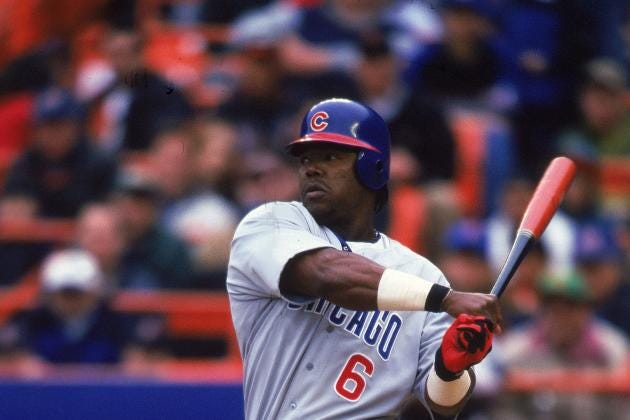
The 47 Best Players from the 1998 Chicago Cubs - #4 Glenallen Hill

4. Glenallen Hill
Objectively, Glenallen Hill is too high on this list. But this is not a list of WAR contributions. There has to be some subjectivity involved, and subjectively, it is really tough to find a cooler member of the 1998 Chicago Cubs than Glenallen Hill.

Hill is a guy who bounced around, starting in Toronto, heading to Cleveland, then to the Cubs for his first stint in 1993, over to the Giants, followed by the Mariners, back to the Cubs in 1998, before stops with the Yankees and Angels before wrapping up his career. But let's just focus on that second stint with the Cubs that started in 1998 when the Cubs selected him off waivers from the Seattle Mariners.

He would put up eight home runs with a line of .351/.414/.573, and he hit a nearly unbellievable .459/.524/.973 at home. I wouldn't believe those numbers if it were anyone but Glenallen Hill. As great as those numbers are, Hill has his place this high on this list because of how he got to those numbers. This man, more than any other player in baseball history, crushed baseballs like no other.
Good God, that is a thing of beauty. You can tell just by how hard he hits and how confidently he drops the bat that not only was it a home run, but there was now way the friendly confines of Wrigley Field were going to keep that ball within its premises. He crushed it to the street, because that's just what Glenallen Hill did.

Since baseball is awful at YouTube, let's look at a home run from 2000 since it is probably what Glenallen Hill is most remembered for.

I'll be honest. If Glenallen Hill had hit that home run in 1998, he might have been number two on this list.

Somehow, since the Cubs felt it necessary to challenge my fandom, Glenallen Hill only played in Game 2 of the NLDS. He went 1-3 which made him one of the Cubs best hitters during the playoffs. In the top of the tenth inning, he made his impact felt even more when he led off the inning and did this.
At first, he takes the base because he knows it was what was good for the team, but after walking a few feet down the line, he gives the pitcher a look as if to say, "You just made the best decision of your life by not giving me something in the strike zone." Even though Hill couldn't make an impact with his bat in extra innings, he wasn't going to let Braves pitchers off easy.
This big, burly man stole third base in extra innings of a tied game, and who could blame him? It's not like he could trust Jeff Blauser to knock him in. Hill made it so all Blauser had to do was put the ball in play and he could score. Blauser, of course, struck out, and Mickey Morandini was called out at second base for a strike out double play to end the inning.

That following year with the Cubs, he hit .300/.353/..581. In 2000, he split time with the Cubs and Yankees and hit .293/.336/.600. He went to the Angels in 2001 and 16 poor games was enough for the entire league to decide he didn't deserve a spot on an MLB roster anymore.

Most importantly, I was able to meet Glenallen Hill at a Cubs convention before the 2004 season. They had a dual signing with him and Kevin Tapani, so I was more excited for this than any sexual encounter I have experienced. First was Tapani, and I expressed that the 1998 team was my favorite team of all-time, and he kind of blew me off. Whatever, Kevin Tapani, your ERA was a far better indicator of your performance than your win-loss record. But then, I told Glenallen Hill the same thing, and he replied, "Man, if we would have beat the Braves, we would have won it all." I KNOW, GLENALLEN HILL, And that is why I am still proclaiming it 20 years later. Glenallen Hill is the coolest player in baseball history, and nobody will ever convince me otherwise.

In case you missed it:
Introduction
#47 - Matt Karchner
#46 - Jose Nieves
#45 - Rodney Myers
#44 - Justin Speier
#43 - Tony Fossas
#42 - Kennie Steenstra
#41 - Chris Haney
#40 - Bob Patterson

#39 - Pedro Valdes

#38 - Derrick White
#37 - Ben Van Ryn
#36 - Terrell Lowery
#35 - Don Wengert
#34 - Kurt Miller
#33 - Jason Maxwell
#32 - Kevin Foster
#31 - Mike Morgan
#30 - Felix Heredia 
#29 - Jeff Blauser
#28 - Jason Hardtke
#27 - Dave Stevens
#26 - Manny Alexander
#25 - Marc Pisciotta
#24 - Kevin Orie
#23 - Sandy Martinez
#22 - Terry Adams
#21 - Matt Mieske
#20 - Amaury Telemaco
#19 - Tyler Houston
#18 - Geremi Gonzalez
#17 - Orlando Merced
#16 - Scott Servais
#15 - Mark Clark
#14 - Lance Johnson
#13 - Brant Brown
#12 - Jose Hernandez
#11 - Steve Trachsel
#10 - Henry Rodriguez
#9 - Kevin Tapani
#8 - Mickey Morandini
#7 - Gary Gaetti

#6 - Rod Beck

#5 - Terry Mulholland

Wednesday, August 29, 2018

The 47 Best Players from the 1998 Chicago Cubs - #5 Terry Mulholland

5. Terry Mulholland
Terry Mulholland was one of the great journeymen of his generation. He played for 11 different teams and only stayed with one for more than three years. He originally signed with the Cubs before the 1997 season where he was a solid rotation member with an ERA just over 4.00, but his win-loss record left something to be desired at 6-12. Still, the Cubs sent him to the Giants in August to finish out the season.

But they resigned him for 1998, and boy am I happy they did.

Although he started one game in April and one in May, he was primarily used as a reliever. Not that he was bad as a starter, as he gave up a total of one run in those two starts combined. When the Cubs brought in Terry Mulholland, my only thought was, "Fuck yeah, Mulholland is in, Cubs are definitely shutting this team down." Anytime a different reliever was brought in a close game instead of Mulholland, I lamented about why Mulholland wasn't coming in. Looking back, it was clear how pitching starved I was as a Cubs fan post-Maddux, but Mulholland was legitimately good that year.

But not only was he good, he was also incredibly clutch down the stretch. The Cubs pitching was an absolute mess by the end of the season. The bullpen had been awful since the middle of May, and the rotation was so weak that Mike Morgan and Don Wengert were consistently getting starts. Finally, the Cubs had seen enough and put Mulholland in the rotation. They gave him one start at the beginning of September and he didn't give up a run. Finally, on September 16, he was officially in the rotation.

In those three starts, he gave up two runs in seven innings, one run in eight innings, and three runs in eight innings. I'm not saying that Terry Mulholland would have definitely won the Cy young Award had he been in the rotation the entire year but considering in six starts, he had a 1.82 ERA, we can't rule it out.

Weirldy, I want to take a look at his worst start of the year, the time he gave up three runs on the final day of the regular season and got a no decision. This was a game against the Houston Astros and if the Cubs won, they could have punched their ticket to the playoffs. Mulholland wasn't great this day, as the Astros were consistently getting hits, and he walked three batters. Still, he was finding a way. Through seven innings, he had given up just one run despite letting nine guys reach base. After throwing 100 pitches, he didn't have much left, but he came out for the eighth, because the Cubs simply didn't have a trusted option outside of Rod Beck in the bullpen. The Astros would string together three hits to score two runs and tie the game which would force the Cubs into a winner-take-all game 163 the following night. But Terry Mulholland was born to take that beating and just keep coming back for more. In fact, he would pitch in relief the next night for game 163. The Cubs didn't have a better option.

Overall, he pitched 112 innings, mostly in relief and accumulated a 2.89 ERA. His ERA was 4.10 in the middle of June, but when everything went wrong for the Cubs pitching, he stepped up his game to drop it by more of a run. It probably could have been about a half run lower than even that final tally. Oh yeah, he even hit well with a line of .294/.368/.412 although with limited starts during the year, it was in just 20 plate appearances.

But Terry Mulholland was not going to be a guy to give you tons of highlights throughout the year. The guy just did his job and did it well. In a season where the pitching still makes me depressed 20 years later, he brought reliability. No historian is going to look back on Cubs history and make note of Terry Mulholland's 1998; there was a phenom striking out 20 guys in a game, and a hitter who made baseball fun again, but as someone who lived through that season, Terry Mulholland was incredible and deserves to be remembered fondly by all Cubs fans. He is now part owner of the Dirty Dogg Saloon, and you can bet your ass that if I find myself in Scottsdale, Arizona, I am going to stop by, grab a Natural Light, and pay homage to the legend that is Terry Mulholland.

In case you missed it:
Introduction
#47 - Matt Karchner
#46 - Jose Nieves
#45 - Rodney Myers
#44 - Justin Speier
#43 - Tony Fossas
#42 - Kennie Steenstra
#41 - Chris Haney
#40 - Bob Patterson

#39 - Pedro Valdes

#38 - Derrick White
#37 - Ben Van Ryn
#36 - Terrell Lowery
#35 - Don Wengert
#34 - Kurt Miller
#33 - Jason Maxwell
#32 - Kevin Foster
#31 - Mike Morgan
#30 - Felix Heredia 
#29 - Jeff Blauser
#28 - Jason Hardtke
#27 - Dave Stevens
#26 - Manny Alexander
#25 - Marc Pisciotta
#24 - Kevin Orie
#23 - Sandy Martinez
#22 - Terry Adams
#21 - Matt Mieske
#20 - Amaury Telemaco
#19 - Tyler Houston
#18 - Geremi Gonzalez
#17 - Orlando Merced
#16 - Scott Servais
#15 - Mark Clark
#14 - Lance Johnson
#13 - Brant Brown
#12 - Jose Hernandez
#11 - Steve Trachsel
#10 - Henry Rodriguez
#9 - Kevin Tapani
#8 - Mickey Morandini

#7 - Gary Gaetti

#6 - Rod Beck

Tuesday, August 28, 2018

The 47 Best Players from the 1998 Chicago Cubs - #6 Rod Beck

6. Rod Beck
I would say Rod Beck is the most universally loved player on this list. I mean, who didn't think Rod Beck was one of the coolest players in baseball? Even when he was with the San Francisco Giants, it was always cool to see this biker-looking dude just throwing heat and overwhelming anyone who stood across from him in a batter's box. That's why I was incredibly excited when the Cubs signed Beck before the 1998 season as he was not only super cool, but the Cubs were desperate for a reliable closer.

Now Rod Beck had an incredible 1998 season, but nothing is more incredible than doing research and finding out Rod Beck's age during that 1998 season. I know there is a picture at the top of the page, but let's give another one and you guess this man's age:
If you're being kind, you're guessing he's 35 years old as a grizzled closer. If you're being honest, you're guessing 48 and wondering how he got such an authentic looking Cubs jersey for his beer league softball game. This man was somehow only 29 years old in 1998. Good lord, this man did some living. I'm not sure how it's possible, but I love it will all of my heart.

I know I have lamented how bad the Cubs bullpen was in 1998, but this excerpt from August 29 of that year really puts things in perspective.
Pen pals: The Cubs have turned over their entire bullpen from Opening Day, with the exception of Rod Beck. They started out with Beck, Terry Adams, Marc Pisciotta, Amaury Telemaco, Ben VanRyn and Bob Patterson. Adams and Pisciotta are now in Class A Iowa, VanRyn was traded to San Diego for Don Wengert and is now playing at Class A Syracuse, Telemaco was waived and is now a starter with Arizona and Patterson was released and is out of baseball.
Rod Beck was incredibly important to this Cubs team as he was the only one who survived the entire season with the team.

Instead of focusing on Rod Beck's triumphs, I decided to see if my memory served me correctly. And the only thing that I can remember that year is that Rod Beck lived that entire season on the edge. If this man came in with a 10 run lead, he would let nine runs score, load the bases with one out, before inducing a double play to close out the game. Most people would generally assume that their closer giving up runs is a bad thing, but not for Rod Beck. The Cubs record in games that Beck gave up runs was an incredible 16-7* (I added the asterisk as it should have been 17-6, but the Brant Brown game turned a win into a loss). And two of those losses were in games where the Cubs had him go more than one inning. He would put the fans as close to a heart attack as possible, and then just up and decide to end the game, Rod Beck pitched to the score, and no one can convince me otherwise.

Because of that, he was super effective. He finished with a 3.02 ERA with a career-best 51 saves. He also led the league in games played for pitchers as the Cubs used him every chance they could, accumulating 80.1 innings pitched.

Unfortunately, the game that I most remember him for is the game he didn't play in. Game 2 of the NLDS against the Braves, the Cubs held a 1-0 lead going into the bottom of the ninth. Instead of bringing in their trusted closer, they kept Kevin Tapani to finish what he started, and he let Javy Lopez tie the game with one swing of the bat. Beck wouldn't even come in extra innings, and the bullpen lost the game for the team in the tenth.

7.80 ERA for the Cubs the following season before being traded to the Boston Red Sox and putting up a 1.93 ERA down the stretch and following up with two more years of quality work before washing out of baseball.

In 2003, he found himself again with the Cubs but this time it was the Iowa Cubs as he was living in an RV right outside the stadium. He would hang out after the games, not only talking with fans but offering them beers as well. Despite putting up a 0.59 ERA for Iowa, the team in Chicago couldn't find room for him so they allowed him to go to the Padres where he had a 1.78 ERA. But the magic finally wore off in 2004 when he had a 6.38 ERA and decided that would be the end of the road for him in baseball.

Sadly, Rod Beck passed away in 2007 at the age of 38. Cocaine and heroin were found in his home but an official reason for death was never released. Rod Beck may have lived a fast life, but he was also generous to friends and helped get toys for needy children. There wasn't anyone who said a bad thing about him, and that's a legacy to be proud of.

In case you missed it:
Introduction
#47 - Matt Karchner
#46 - Jose Nieves
#45 - Rodney Myers
#44 - Justin Speier
#43 - Tony Fossas
#42 - Kennie Steenstra
#41 - Chris Haney
#40 - Bob Patterson

#39 - Pedro Valdes

#38 - Derrick White
#37 - Ben Van Ryn
#36 - Terrell Lowery
#35 - Don Wengert
#34 - Kurt Miller
#33 - Jason Maxwell
#32 - Kevin Foster
#31 - Mike Morgan
#30 - Felix Heredia 
#29 - Jeff Blauser
#28 - Jason Hardtke
#27 - Dave Stevens
#26 - Manny Alexander
#25 - Marc Pisciotta
#24 - Kevin Orie
#23 - Sandy Martinez
#22 - Terry Adams
#21 - Matt Mieske
#20 - Amaury Telemaco
#19 - Tyler Houston
#18 - Geremi Gonzalez
#17 - Orlando Merced
#16 - Scott Servais
#15 - Mark Clark
#14 - Lance Johnson
#13 - Brant Brown
#12 - Jose Hernandez
#11 - Steve Trachsel
#10 - Henry Rodriguez
#9 - Kevin Tapani

#8 - Mickey Morandini

#7 - Gary Gaetti

Thursday, August 23, 2018

The 47 Best Players from the 1998 Chicago Cubs - #7 Gary Gaetti

7. Gary Gaetti
Is this too high to put a guy who only played a little over a month for the Cubs in 1998? No, because it is my list, and I can do whatever I want. Also, spoiler alert, he's not even the highest ranked guy on this list that was acquired late in the season.

Gary Gaetti had a fascinating career before joining the Cubs. He began his career in Minnesota where he had some great years including a World Series in 1987 and finishing eighth in the AL in OPS and winning a Gold Glove. Then he fell off and things only got worse when he went to California in 1991 as he lost the ability to hit at age 32. Then, he went to Kansas City in 1993, and he regained the ability to hit, even hitting 35 home runs in 1995. He would go to the Cardinals in 1996 and put nearly three seasons of good work for them during his age 37-39 years. But the Cardinals acquired Fernando Tatis at the trade deadline and decided he was their third baseman of the present and future. They waived Gary Gaetti on August 9, and ten days later, when he was free to join any other team, he signed on with the Chicago Cubs.

His impact in 37 games was nothing short of incredible. Not only did he fill in at third base, allowing Jose Hernandez to replace Jeff Blauser at shortstop to eliminate the black holes in the lineup that had been the left side of the infield, but he exceeded every possible expectation during those final six weeks.

The Cubs started him off slowly, as he had just eight at bats in his first five games with the team. In the sixth game, he took John Hudek of the Cincinnati Reds deep for a two run homer, and he would start every game but one from then on. Oh, and that game he didn't start? He hit a pinch-hit home run in his one at bat.

On September 2nd, he continued his Reds killing ways by hitting a two-run homer in the eighth inning to turn a one-run deficit into a one-run lead. He also had a home run against the Brewers that sparked an eight-run comeback in one of my favorite games ever. Oh, and that pinch-hit home run i casually mentioned above? Yeah, that was in the tenth inning off of Trevor Hoffman to give the Cubs a win. This man did not just hit well. He was incredibly clutch as well. In close & late situations, he may have only had 25 at bats, but he managed 13 hits, four doubles, and four homers for a line of .520/.556/1.160. Gary Gaetti fucking ruled.

But there was no more clutch moment than Game 163. In a winner-takes-all, loser-goes-home matchup against the San Francisco Giants, neither team had scored halfway through the game. After a Henry Rodriguez single, Gary Gaetti, facing an 0-2 count, did this:

It's one of the most important home runs in Cubs history. I know nine years isn't some incredible playoff drought, but it's not that the Cubs didn't make the playoffs, it's that they could barely muster up a season of competence during that time. It was that the Cubs had one of the greatest pitchers ever, but he chose to go to Atlanta for less money. These were the true lovable losers, but on this night, Gary Gaetti hit a ball so hard that all Cubs fans felt like champions.

The Cubs resigned him after 1998, but he would only last 1999 with the team as they released him after the season when it was clear that the magic from 1998 had worn off. He would sign with the Red Sox but would only play five games before retiring early in the 2000 season. He played in over 2500 games before it was all said and done. I would say that was one hll of a career, and in 1998, he gave the Cubs one hell of a run. Gary Gaetti owned.

Wednesday, August 15, 2018

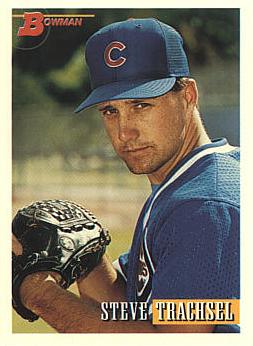
The 47 Best Players from the 1998 Chicago Cubs - #11 Steve Trachsel

11. Steve Trachsel
Earlier, I wrote about how Jose Hernandez embodied the 1998 season. Steve Trachsel more embodies mid-1990s Cubs. He was a guy who was good, but not quite good enough for the role that he was given. He had one really good year where he became an All-Star (1996), but there was no way that performance would ever last, and for Trachsel, it didn't. He wasn't known for his pitches, but for how long it took him to throw them as he earned the nickname of The Human Rain Delay.

1998 was his eighth with the organization and sixth straight in the majors. And even though it wasn't his best season, it was definitely the most memorable. When the season started, it looked as though Trachsel had rediscovered his 1996 magic. In his first ten starts, he never gave up more than three runs, and his ERA was a tidy 3.13. His first start of the season was the most special in that stretch as not only did he make it through seven innings, but he did it in the first home game without Harry Caray. Here is the seventh inning stretch, performed by Harry's widow, Dutchie.

I'm not crying; YOU'RE crying.

After the hot start, Steve Trachsel's true performance began to show up. He did not give up less than four runs in any of his next six starts. He was solid, and he did enough to give the Cubs more wins than losses in his starts. His lowlight would come on August 7th against the St. Louis Cardinals when he gave up seven runs while recording just a single out. It would not be his last memorable start against the Cubs' rival as he was also the man who gave up Mark McGwire's 62nd home run.

Good God, can we please bring back steroids?

Despite how memorable those moments were, what mattered the most from that season was one start at the end of September.

At the end of 162 games, both the Cubs and San Francisco Giants were tied for the Wildcard at 89-73. They would play a single game to decide who would move onto the playoffs at Wrigley Field on Monday, September 28. Yes, with their livelihood on the line, the Cubs turned to Trachsel, and his 4.60 ERA. Although on paper, the Giants choice of Marc Gardner wasn't much better, with him accumulating a 4.27 ERA, but Gardner had been red hot as the only time he gave up three runs in his last five starts was when he pitched a complete game against the Dodgers. He had gone at least seven innings in each of those starts; Trachsel had one quality start in that same time frame.

Through four innings, both managers looked smart for their choices. Gardner had given up just two singles and a walk while Trachsel had not given up a single hit but command was an issue as he had walked four and hit one batter with a pitch, including loading the bases in the fourth inning before striking out Brian Johnson to get out of the jam.

Somehow, Trachsel kept the zeros going in the fifth, despite yet another walk to the Giants. And in the bottom half, the Cubs finally broke through on Gardner thanks to a Gary Gaetti two-run homer. Trachsel had a 1-2-3 inning in the sixth before the Cubs added another two runs on a Matt Mieske pinch-hit single. Trachsel got one more out before allowing his first hit and another walk which was enough for Riggleman to take him out of the game and have the bullpen get out of the jam. Overall, he went 6.1 innings, gave up six walks, hit a batter, and gave up one hit, all without giving up a run. Somehow, despite all of those walks, Barry Bonds never reached base during the game. Although the Giants made a comeback in the ninth, it was too little, too late, as the Cubs held on 5-3 to advance to the playoffs.

And that would be the last game the Cubs would win that season as they got swept by the Braves before Trachsel could start Game Four. He would end his season at 15-8, with a 4.46 ERA in 208 innings.

He lost 18 times with a 5.58 ERA in 1999 and the Cubs let him go to the Rays in free agency. He was then traded to the Blue Jays before signing with the Mets in 2001. He put up three really strong years with ERAs of 3.37, 3.78, and 4.00 from 2002-2004. In 2007, he signed with the Orioles before they traded him to the Cubs at the waiver deadline, but he was awful for the Cubs, putting up an 8.31 ERA. He signed again with the Orioles for 2008, but the magic was gone, and he retired after eight starts and and 8.39 ERA.

No, Steve Trachsel wasn't the best pitcher on the Cubs that year, but there is nobody on the staff who had more memorable performances (good and bad) than him. 1998 was such a weird year that even The Human Rain Delay was exciting.

In case you missed it:
Introduction
#47 - Matt Karchner
#46 - Jose Nieves
#45 - Rodney Myers
#44 - Justin Speier
#43 - Tony Fossas
#42 - Kennie Steenstra
#41 - Chris Haney
#40 - Bob Patterson

#39 - Pedro Valdes

#38 - Derrick White
#37 - Ben Van Ryn
#36 - Terrell Lowery
#35 - Don Wengert
#34 - Kurt Miller
#33 - Jason Maxwell
#32 - Kevin Foster
#31 - Mike Morgan
#30 - Felix Heredia 
#29 - Jeff Blauser
#28 - Jason Hardtke
#27 - Dave Stevens
#26 - Manny Alexander
#25 - Marc Pisciotta
#24 - Kevin Orie
#23 - Sandy Martinez
#22 - Terry Adams
#21 - Matt Mieske
#20 - Amaury Telemaco
#19 - Tyler Houston
#18 - Geremi Gonzalez
#17 - Orlando Merced
#16 - Scott Servais
#15 - Mark Clark
#14 - Lance Johnson

#13 - Brant Brown

#12 - Jose Hernandez

Tuesday, August 7, 2018

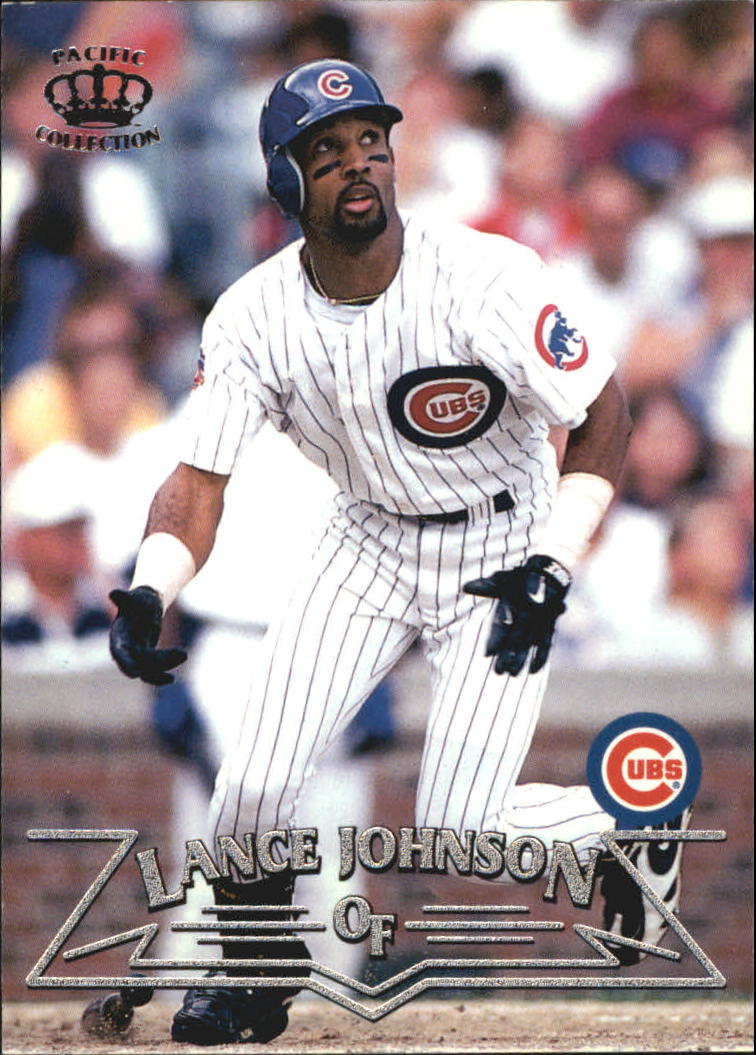
The 47 Best Players from the 1998 Chicago Cubs - #14 Lance Johnson

14. Lance Johnson
Even before he was a Cub, Lance Johnson was always a player I really liked despite him most notably playing for the crosstown rival, Chicago White Sox. Hell, I didn't even find it aggravating when White Sox announcers would refer to him as One Dog. As an undersized guy my entire life, I appreciated Johnson being only 5'10" and 160 pounds since that is about my current adult size. Could I make a run at the major leagues? It's not impossible, just need to gain hand-eye coordination, the ability to swing a baseball bat, and not have a noodle arm.

Helping my case is that Johnson weirdly got better into his early 30s and put up his best numbers in 1996 for the New York Mets at the age of 32 where he hit 21 triples, stole 50 bases and led the league in hits. In 1997, his numbers he was nearly as good, but the Mets traded him to the Chicago Cubs in a deal where each team exchanged two pitchers and a center fielder (Brian McRae going to the Mets).

The Cubs thought they had a center field solution with Johnson, but early on, that did not appear to be the case. On April 27th, he was hitting .115, and then he went down with an injury that would keep him out until the All-Star break. And although that was a mighty hole to dig out of, Lance did everything he could to make a positive impact. It took him until August 18 to get his average above .200, but that average just kept rising as the season went on.

He caught fire in September as he hit .345/.395/.491 to give him a very respectable final season line of .280/.335/.352 by the end of the season. But even though he was only able to play in 85 games, Lance Johnson came through down the stretch.

In Game 163 against the San Francisco Giants, he led off the sixth inning with a single and would help extend the Cubs lead. He also received all three starts in the playoffs but was unable to keep the hot hitting going as he had just two hits in 12 at bats.

Health was Johnson's downfall as he could not stay healthy in 1999 and his numbers began to drop off. He signed with the Yankees as a free agent for the 2000 season, but only played in 18 games before washing out of the big leagues for good.

But Lance Johnson was just a cool player. He was small, super fast, and the man barely believed in doubles as he was always trying to stretch them into triples. Even with the White Sox, he was fun to watch, but I am glad that I got to cheer for him while playing for the Cubs, even with injuries limiting his time. A guy like Lance Johnson gave you hope. Now it's time for me to hit the batting cages.

Thursday, August 2, 2018

The 47 Best Players from the 1998 Chicago Cubs - #16 Scott Servais

16. Scott Servais
Scott Servais started his career in Houston and was traded to the Cubs along with Luis Gonzalez in the middle of 1995 for Rick Wilkins, and he proceeded to tear shit up. He played in 52 games and hit .286/.371/.560. It didn't seem like the Cubs had just found their new catcher, it seemed like they might have the steal of the century. At least it did to me, who was only 11 years old at the time and thought that a 52-game sample size was plenty big enough to disregard his previous work for the Astros. Of course, if someone hit 3-4 in the first game of the season, I would think that maybe they could do that every game. I mean, they already did it once, just repeat that performance 161 more times.

Anyway, let's ignore how impressionable the young version of me was and focus on Servais. To the surprise of no one over the age of 12, his numbers came back to Earth. But he was still the Cubs starting catcher entering the 1998 season.

Scott Servais was as offensively productive as you would expect, which is to say not very. The highest batting average he had at any point in the season was .235, and that was on April 14. And things somehow find a way to get significantly worse. In the middle of July, he was hitting just .196 with a .289 slugging percentage.

Jim Riggleman tried to give Tyler Houston more playing time, but he was battling a groin injury and couldn't find his hitting stroke. So Servais kept playing consistently although definitely in a timeshare with Houston and occasionally Sandy Martinez. Servais did get better though, and his numbers rose to a not nearly as bad .222/.289/.338 line with seven home runs.

Scott Servais only got one start in the NLDS, but he made it count. In the sixth inning of Game 2, Mickey Morandini led off with a single and Servais followed with a base hit to right field. After a sacrifice bunt from Kevin Tapani, Lance Johnson knocked Morandini home on a ground out, giving the Cubs a 1-0 lead.

Although the Braves would tie that game in the ninth, Servais had another chance to make an impact in the tenth inning. He was already 2-3 on the day, but with two runners on, the Cubs chose to pinch hit for Servais. This led to Jeff Blauser shitting the bed on a strike 'em out, throw 'em out double play to end the rally.

That would be Servais's last game for the Cubs. He signed with the Giants in free agency and had a short stint with the Rockies before coming home to Houston to end his career. he would stay in baseball, starting off as a member of the front office for the Rangers and Angels before becoming the Manager of the Seattle Mariners. Although he has never admitted to this publicly, his greatest career highlight is meeting with my wife as an ambassador for the Angels.

In case you missed it:
Introduction
#47 - Matt Karchner
#46 - Jose Nieves
#45 - Rodney Myers
#44 - Justin Speier
#43 - Tony Fossas
#42 - Kennie Steenstra
#41 - Chris Haney
#40 - Bob Patterson

#39 - Pedro Valdes

#38 - Derrick White
#37 - Ben Van Ryn
#36 - Terrell Lowery
#35 - Don Wengert
#34 - Kurt Miller
#33 - Jason Maxwell
#32 - Kevin Foster
#31 - Mike Morgan
#30 - Felix Heredia 
#29 - Jeff Blauser
#28 - Jason Hardtke
#27 - Dave Stevens
#26 - Manny Alexander
#25 - Marc Pisciotta
#24 - Kevin Orie
#23 - Sandy Martinez
#22 - Terry Adams
#21 - Matt Mieske
#20 - Amaury Telemaco
#19 - Tyler Houston

#18 - Geremi Gonzalez

#17 - Orlando Merced