Showing posts with label Pitchers. Show all posts

Wednesday, September 5, 2018

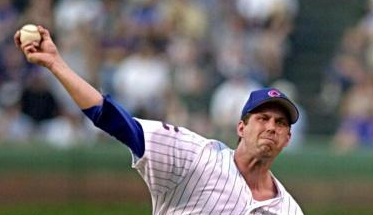
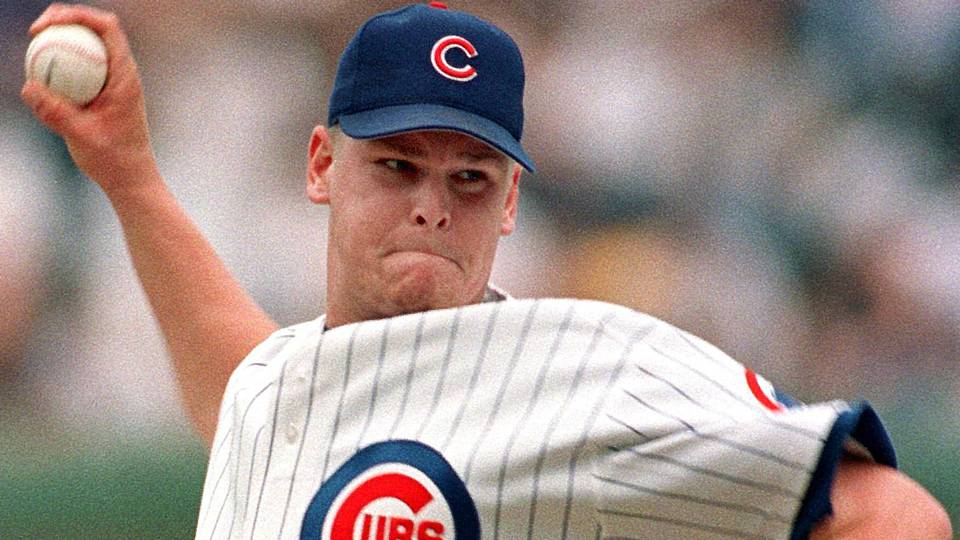
The 47 Best Players from the 1998 Chicago Cubs - #2 Kerry Wood

2. Kerry Wood
Holy shit, Kerry Wood was good. Like, it is not nearly appreciated enough how good Kerry Wood's stuff was as a pitcher. Here's how good he was. Kerry Wood was a SURE THING when he was called up to the major leagues. Nobody doubted that he would be awesome. This was despite the fact that between Double-A and Triple-A the previous year, he had a 4.57 ERA and walked nearly EIGHT batters per nine innings. He most definitely needed some more seasoning in the minor leagues, and the Cubs gave it to him, with a single start in Iowa where he struck out 11 batters in five innings.

Kerry Wood did not come out and set the world on fire immediately. After giving up seven runs in less than two innings, his ERA was sitting at 8.74 after three starts. Of course, he followed that up with his best start so far, going seven innings and giving up just one run against the Cardinals.

Then he faced the Astros on May 6. There's not a whole lot I can say about this game that hasn't been said multiple times before. Here are a couple fun facts. The first eight batters struck out that day as Shane Reynolds also struck out the side in the first inning. Starting in the seventh inning, when Kerry Wood should have been slowing down, he struck out seven straight batters. The Astros heart of their lineup, 3-4-5 hitters, Jeff Bagwell, Jack Howell, and Moises Alou had nine at bats and struck out nine times. It's the greatest game ever pitched as far as I'm concerned as there is a very solid argument that on top of the 20 strikeouts, he also should have had a no hitter. Also, just to prove it wasn't a fluke, Wood struck out 13 Diamondbacks in his next start.

Let's just take a break to watch some gifs, because even if you've seen these 1000 times, they are still mesmerizing.


Poor Derek Bell. With only seeing one batter go down before him, he had no idea what he was in store for, and it showed as he missed so bad that he had to jog forward to avoid face planting on home plate.


It's not just that Jeff Bagwell's knees buckle but the total disdain he has as he walks off on shame that truly makes it beautiful.


Look at poor Dave Clark. He's all confident, getting ready to make good contact with a pitch, and then he realizes that the pitch is diving a foot below his swing plane, but by that point, it's already too late. I mean, just look at that poor man's face.


Brad Ausmus probably made the wise decision to just keep the bat on his shoulders for this one. But most importantly, if you look up at the information box in the upper left corner, you can see that this pitch was so nasty that they gave Wood two strikes for it. That's pretty damn impressive.


When Bill Spiers heard Larry Dierker call his name to go in and pinch hit, do you think he tried to pretend he couldn't hear him? I would have definitely tried that if I was Bill Spiers. He should have stuck two fingers down his throat, started puking, and just not had to deal with this. As for the pitch, it looks like it almost hits Spiers right elbow and also his left hip. It never comes close to hitting Spiers's bat though.


This is the final strikeout of the game. Not only did Derek Bell get made to look silly again, but even Kerry Wood has earned a subdued fist pump to celebrate.

Okay, I guess I did still have a few things to say about that game.

After his two-start, 33 strikeout run, he would continue to dominate, striking out at least 10 batters seven more times. His most impressive outing was August 26, his second-to-last start of the regular season, when he struck out 16 Cincinnati Reds batters in eight innings.

He would go 13-6 with a 3.40 ERA and led the league in strikeouts per nine innings since he had an incredible 233 in 166 innings. His 12.5 beat second-place Curt Schilling by more than 2.5 strikeouts per nine innings. He also won the Rookie of the Year award, barely edging out Todd Helton.

Although Wood did not pitch the final month of the season, he did come back for the playoffs, giving up just one run in five innings, but the bullpen promptly let the Braves blow the game wide open.

Wood didn't make a single appearance the next season as he had to have Tommy John surgery before the 1999 season. It's not too surprising as the 20-year-old eclipsed 100 pitches in 21 of his 26 starts in 1998. In 2000, it looked like he may never reclaim the magic he showed his rookie year as he put up a 4.80 ERA in 137 innings.

But then, 2001-2003, he turned things around, pitching about 200 innings with an ERA in the mid-to-low 3s while striking out over ten batters per nine innings. Unfortunately, it was not made to last as he took a small step back in 2004, and by 2005, he was forced to try a transition to the bullpen.

If you were following the Cubs back then, you probably resigned yourself to the fact that Kerry Wood would never be productive again. No matter what he did, he could not stay healthy long enough to get in a groove to be a reliable member of the pitching staff. Between 2006-2007, he pitched just over 40 innings combined.

But in 2008, he reinvented himself as a successful closer for the team, racking up 34 saves. The Cubs didn't believe the magic was real and allowed him to go to the Indians in 2009, not even making an offer for Wood to stay. he was solid for the Indians in 2009, then struggled with them in 2010 before being traded to the Yankees where he dominated as a setup man for Mariano Rivera, putting up the nicest ERA of 0.69. He came back to the Cubs in 2011 and was effective again in relief. But in 2012, it fell apart, and he would retire later that year.

Kerry Wood is the most exciting pitcher in Cubs history. He's not the best, but Kerry Wood in 1998 was appointment viewing. Considering he struck out 20 guys in his sixth start, every start after, you came in with the thought that it might be possible again. Information about how pitch counts weren't really out there, at least not for me during my early teenage years, so you didn't really care if he was racking up 120 pitches while striking out 13 guys in seven innings. It was just awesome every time you saw somebody massively whiff on a breaking ball. Kerry Wood was the shit.

And somehow, his story is only the second most important from the 1998 Chicago Cubs.

In case you missed it:
Introduction
#47 - Matt Karchner
#46 - Jose Nieves
#45 - Rodney Myers
#44 - Justin Speier
#43 - Tony Fossas
#42 - Kennie Steenstra
#41 - Chris Haney
#40 - Bob Patterson

#39 - Pedro Valdes

#38 - Derrick White
#37 - Ben Van Ryn
#36 - Terrell Lowery
#35 - Don Wengert
#34 - Kurt Miller
#33 - Jason Maxwell
#32 - Kevin Foster
#31 - Mike Morgan
#30 - Felix Heredia 
#29 - Jeff Blauser
#28 - Jason Hardtke
#27 - Dave Stevens
#26 - Manny Alexander
#25 - Marc Pisciotta
#24 - Kevin Orie
#23 - Sandy Martinez
#22 - Terry Adams
#21 - Matt Mieske
#20 - Amaury Telemaco
#19 - Tyler Houston
#18 - Geremi Gonzalez
#17 - Orlando Merced
#16 - Scott Servais
#15 - Mark Clark
#14 - Lance Johnson
#13 - Brant Brown
#12 - Jose Hernandez
#11 - Steve Trachsel
#10 - Henry Rodriguez
#9 - Kevin Tapani
#8 - Mickey Morandini
#7 - Gary Gaetti
#6 - Rod Beck
#5 - Terry Mulholland

#4 - Glenallen Hill

#3 - Mark Grace

Wednesday, August 29, 2018

The 47 Best Players from the 1998 Chicago Cubs - #5 Terry Mulholland

5. Terry Mulholland
Terry Mulholland was one of the great journeymen of his generation. He played for 11 different teams and only stayed with one for more than three years. He originally signed with the Cubs before the 1997 season where he was a solid rotation member with an ERA just over 4.00, but his win-loss record left something to be desired at 6-12. Still, the Cubs sent him to the Giants in August to finish out the season.

But they resigned him for 1998, and boy am I happy they did.

Although he started one game in April and one in May, he was primarily used as a reliever. Not that he was bad as a starter, as he gave up a total of one run in those two starts combined. When the Cubs brought in Terry Mulholland, my only thought was, "Fuck yeah, Mulholland is in, Cubs are definitely shutting this team down." Anytime a different reliever was brought in a close game instead of Mulholland, I lamented about why Mulholland wasn't coming in. Looking back, it was clear how pitching starved I was as a Cubs fan post-Maddux, but Mulholland was legitimately good that year.

But not only was he good, he was also incredibly clutch down the stretch. The Cubs pitching was an absolute mess by the end of the season. The bullpen had been awful since the middle of May, and the rotation was so weak that Mike Morgan and Don Wengert were consistently getting starts. Finally, the Cubs had seen enough and put Mulholland in the rotation. They gave him one start at the beginning of September and he didn't give up a run. Finally, on September 16, he was officially in the rotation.

In those three starts, he gave up two runs in seven innings, one run in eight innings, and three runs in eight innings. I'm not saying that Terry Mulholland would have definitely won the Cy young Award had he been in the rotation the entire year but considering in six starts, he had a 1.82 ERA, we can't rule it out.

Weirldy, I want to take a look at his worst start of the year, the time he gave up three runs on the final day of the regular season and got a no decision. This was a game against the Houston Astros and if the Cubs won, they could have punched their ticket to the playoffs. Mulholland wasn't great this day, as the Astros were consistently getting hits, and he walked three batters. Still, he was finding a way. Through seven innings, he had given up just one run despite letting nine guys reach base. After throwing 100 pitches, he didn't have much left, but he came out for the eighth, because the Cubs simply didn't have a trusted option outside of Rod Beck in the bullpen. The Astros would string together three hits to score two runs and tie the game which would force the Cubs into a winner-take-all game 163 the following night. But Terry Mulholland was born to take that beating and just keep coming back for more. In fact, he would pitch in relief the next night for game 163. The Cubs didn't have a better option.

Overall, he pitched 112 innings, mostly in relief and accumulated a 2.89 ERA. His ERA was 4.10 in the middle of June, but when everything went wrong for the Cubs pitching, he stepped up his game to drop it by more of a run. It probably could have been about a half run lower than even that final tally. Oh yeah, he even hit well with a line of .294/.368/.412 although with limited starts during the year, it was in just 20 plate appearances.

But Terry Mulholland was not going to be a guy to give you tons of highlights throughout the year. The guy just did his job and did it well. In a season where the pitching still makes me depressed 20 years later, he brought reliability. No historian is going to look back on Cubs history and make note of Terry Mulholland's 1998; there was a phenom striking out 20 guys in a game, and a hitter who made baseball fun again, but as someone who lived through that season, Terry Mulholland was incredible and deserves to be remembered fondly by all Cubs fans. He is now part owner of the Dirty Dogg Saloon, and you can bet your ass that if I find myself in Scottsdale, Arizona, I am going to stop by, grab a Natural Light, and pay homage to the legend that is Terry Mulholland.

In case you missed it:
Introduction
#47 - Matt Karchner
#46 - Jose Nieves
#45 - Rodney Myers
#44 - Justin Speier
#43 - Tony Fossas
#42 - Kennie Steenstra
#41 - Chris Haney
#40 - Bob Patterson

#39 - Pedro Valdes

#38 - Derrick White
#37 - Ben Van Ryn
#36 - Terrell Lowery
#35 - Don Wengert
#34 - Kurt Miller
#33 - Jason Maxwell
#32 - Kevin Foster
#31 - Mike Morgan
#30 - Felix Heredia 
#29 - Jeff Blauser
#28 - Jason Hardtke
#27 - Dave Stevens
#26 - Manny Alexander
#25 - Marc Pisciotta
#24 - Kevin Orie
#23 - Sandy Martinez
#22 - Terry Adams
#21 - Matt Mieske
#20 - Amaury Telemaco
#19 - Tyler Houston
#18 - Geremi Gonzalez
#17 - Orlando Merced
#16 - Scott Servais
#15 - Mark Clark
#14 - Lance Johnson
#13 - Brant Brown
#12 - Jose Hernandez
#11 - Steve Trachsel
#10 - Henry Rodriguez
#9 - Kevin Tapani
#8 - Mickey Morandini

#7 - Gary Gaetti

#6 - Rod Beck

Tuesday, August 28, 2018

The 47 Best Players from the 1998 Chicago Cubs - #6 Rod Beck

6. Rod Beck
I would say Rod Beck is the most universally loved player on this list. I mean, who didn't think Rod Beck was one of the coolest players in baseball? Even when he was with the San Francisco Giants, it was always cool to see this biker-looking dude just throwing heat and overwhelming anyone who stood across from him in a batter's box. That's why I was incredibly excited when the Cubs signed Beck before the 1998 season as he was not only super cool, but the Cubs were desperate for a reliable closer.

Now Rod Beck had an incredible 1998 season, but nothing is more incredible than doing research and finding out Rod Beck's age during that 1998 season. I know there is a picture at the top of the page, but let's give another one and you guess this man's age:
If you're being kind, you're guessing he's 35 years old as a grizzled closer. If you're being honest, you're guessing 48 and wondering how he got such an authentic looking Cubs jersey for his beer league softball game. This man was somehow only 29 years old in 1998. Good lord, this man did some living. I'm not sure how it's possible, but I love it will all of my heart.

I know I have lamented how bad the Cubs bullpen was in 1998, but this excerpt from August 29 of that year really puts things in perspective.
Pen pals: The Cubs have turned over their entire bullpen from Opening Day, with the exception of Rod Beck. They started out with Beck, Terry Adams, Marc Pisciotta, Amaury Telemaco, Ben VanRyn and Bob Patterson. Adams and Pisciotta are now in Class A Iowa, VanRyn was traded to San Diego for Don Wengert and is now playing at Class A Syracuse, Telemaco was waived and is now a starter with Arizona and Patterson was released and is out of baseball.
Rod Beck was incredibly important to this Cubs team as he was the only one who survived the entire season with the team.

Instead of focusing on Rod Beck's triumphs, I decided to see if my memory served me correctly. And the only thing that I can remember that year is that Rod Beck lived that entire season on the edge. If this man came in with a 10 run lead, he would let nine runs score, load the bases with one out, before inducing a double play to close out the game. Most people would generally assume that their closer giving up runs is a bad thing, but not for Rod Beck. The Cubs record in games that Beck gave up runs was an incredible 16-7* (I added the asterisk as it should have been 17-6, but the Brant Brown game turned a win into a loss). And two of those losses were in games where the Cubs had him go more than one inning. He would put the fans as close to a heart attack as possible, and then just up and decide to end the game, Rod Beck pitched to the score, and no one can convince me otherwise.

Because of that, he was super effective. He finished with a 3.02 ERA with a career-best 51 saves. He also led the league in games played for pitchers as the Cubs used him every chance they could, accumulating 80.1 innings pitched.

Unfortunately, the game that I most remember him for is the game he didn't play in. Game 2 of the NLDS against the Braves, the Cubs held a 1-0 lead going into the bottom of the ninth. Instead of bringing in their trusted closer, they kept Kevin Tapani to finish what he started, and he let Javy Lopez tie the game with one swing of the bat. Beck wouldn't even come in extra innings, and the bullpen lost the game for the team in the tenth.

7.80 ERA for the Cubs the following season before being traded to the Boston Red Sox and putting up a 1.93 ERA down the stretch and following up with two more years of quality work before washing out of baseball.

In 2003, he found himself again with the Cubs but this time it was the Iowa Cubs as he was living in an RV right outside the stadium. He would hang out after the games, not only talking with fans but offering them beers as well. Despite putting up a 0.59 ERA for Iowa, the team in Chicago couldn't find room for him so they allowed him to go to the Padres where he had a 1.78 ERA. But the magic finally wore off in 2004 when he had a 6.38 ERA and decided that would be the end of the road for him in baseball.

Sadly, Rod Beck passed away in 2007 at the age of 38. Cocaine and heroin were found in his home but an official reason for death was never released. Rod Beck may have lived a fast life, but he was also generous to friends and helped get toys for needy children. There wasn't anyone who said a bad thing about him, and that's a legacy to be proud of.

In case you missed it:
Introduction
#47 - Matt Karchner
#46 - Jose Nieves
#45 - Rodney Myers
#44 - Justin Speier
#43 - Tony Fossas
#42 - Kennie Steenstra
#41 - Chris Haney
#40 - Bob Patterson

#39 - Pedro Valdes

#38 - Derrick White
#37 - Ben Van Ryn
#36 - Terrell Lowery
#35 - Don Wengert
#34 - Kurt Miller
#33 - Jason Maxwell
#32 - Kevin Foster
#31 - Mike Morgan
#30 - Felix Heredia 
#29 - Jeff Blauser
#28 - Jason Hardtke
#27 - Dave Stevens
#26 - Manny Alexander
#25 - Marc Pisciotta
#24 - Kevin Orie
#23 - Sandy Martinez
#22 - Terry Adams
#21 - Matt Mieske
#20 - Amaury Telemaco
#19 - Tyler Houston
#18 - Geremi Gonzalez
#17 - Orlando Merced
#16 - Scott Servais
#15 - Mark Clark
#14 - Lance Johnson
#13 - Brant Brown
#12 - Jose Hernandez
#11 - Steve Trachsel
#10 - Henry Rodriguez
#9 - Kevin Tapani

#8 - Mickey Morandini

#7 - Gary Gaetti

Tuesday, August 21, 2018

The 47 Best Players from the 1998 Chicago Cubs - #9 Kevin Tapani

9. Kevin Tapani
After a solid career that peaked in 1991 when he had an ERA under 3.00 for the World Series Champion Minnesota Twins, the Cubs signed him before the 1997 season as he was recovering from an injury. Although he did not make his debut until July, he still managed to produce a 9-3 record with a 3.39 ERA in 13 starts that year so it looked to be a worthwhile investment for the Cubs.

In 1998, he continued his winning ways, and that is what he was most known for during that year. Despite having a 4.85 ERA in 219 innings, he still managed a 19-9 record on the year. Even at a young age, I knew that ERA was a better indicator than wins and losses, but it didn't matter. What mattered is that when Tapani pitched, the Cubs won. Sure, he wasn't the biggest contributing factor in many of those games, but probability doesn't matter during a season, all that matters is results, and Tapani managed to put up 19 wins that year.

Tapani's year was a bit odd, as he had a 3.80 ERA at home but a 5.81 ERA on the road. That's not so weird as even though Wrigley Field is usually a hitter's park, it is usually easier to pitch at home. What makes it odd is that he somehow managed a 5.40 ERA in day games which the Cubs are known for playing a lot more of than any other team. If you put him in Wrigley at night, this man was straight money.

With that mixed bag of results, his regular season highlight may have been the complete game shutout of the Los Angeles Dodgers, but it may have been July 20, 1998. With the bases loaded, Tapani was in an unfamiliar position; instead of pitching his way out of it, he was up at the plate with a full count against Denny Neagle. Neagle threw a changeup to try to trick Tapani, but due to his slow bat speed, it worked out perfectly for him as he hit the ball out of the park for a grand slam, something Sammy Sosa had never done at that point in his career.

But the most important thing about Tapani that season is that he really did pitch his best when it mattered most. Chicago was down 1-0 in their NLDS matchup with Atlanta, and the Cubs sent Tapani to the mound to take on Tom Glavine and the Braves for Game 2. Both pitchers put up zeroes through five innings. Tapani gave up a pair of hits in the first inning but only gave up one hit over the next four frames.

In the top of the sixth, Tapani put his bat to work. After Mickey Morandini and Scott Servais started off the inning with back-to-back singles, Tapani strode confidently to the plate. With the pressure on and a future Hall-of-Famer pitching, Tapani reared back and dropped down a sacrifice bunt to put both runners in scoring position. Lance Johnson would hit a ball to the outfield that was deep enough to bring Morandini home for a 1-0 lead for the Cubs.

And Tapani continued to dominate on the mound. The Braves managed two baserunners from innings 5-8, as Tapani continued to perplex their batters by mixing things up. Unfortunately, the Cubs were not able to add to their lead as a combination of Tom Glavine, John Rocker, and Rudy Seanez were able to shut down the Cubs batters from adding to the lead.

Up 1-0 in the bottom of the ninth, Jim Riggleman had a tough decision to make. Do you keep in Tapani to try to finish out the game, or do you bring in your closer, Rod Beck, a man who had 53 saves on the year to come in and do his damn job? Riggleman trusted Tapani to finish what he had started.

Ryan Klesko led off the inning, but Tapani was able to get hi to fly out to center field. One down, two to go. Next up was Javy Lopez. On a 1-0 pitch, Tapani hung a breaking ball and Lopez crushed it into the left field stands. Tie ball game. Tapani would recover to get the next two outs, and although the Cubs threatened in the top of the 10th, they were unable to score, and the Braves put up another run in the bottom half of that inning to win it and go up 2-0 before sweeping the Cubs in the next game.

He held on to pitch for three more seasons with the Cubs before retiring after 2001. His ERAs still ranged from 4.49 to 5.03, unfortunately that win magic was fully depleted as he won 6, 8, and 9 games respectively in those final years. He still loves the game as he now coaches high school baseball in Minnesota.

Wednesday, August 15, 2018

The 47 Best Players from the 1998 Chicago Cubs - #11 Steve Trachsel

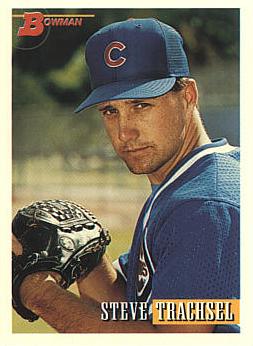
11. Steve Trachsel
Earlier, I wrote about how Jose Hernandez embodied the 1998 season. Steve Trachsel more embodies mid-1990s Cubs. He was a guy who was good, but not quite good enough for the role that he was given. He had one really good year where he became an All-Star (1996), but there was no way that performance would ever last, and for Trachsel, it didn't. He wasn't known for his pitches, but for how long it took him to throw them as he earned the nickname of The Human Rain Delay.

1998 was his eighth with the organization and sixth straight in the majors. And even though it wasn't his best season, it was definitely the most memorable. When the season started, it looked as though Trachsel had rediscovered his 1996 magic. In his first ten starts, he never gave up more than three runs, and his ERA was a tidy 3.13. His first start of the season was the most special in that stretch as not only did he make it through seven innings, but he did it in the first home game without Harry Caray. Here is the seventh inning stretch, performed by Harry's widow, Dutchie.

I'm not crying; YOU'RE crying.

After the hot start, Steve Trachsel's true performance began to show up. He did not give up less than four runs in any of his next six starts. He was solid, and he did enough to give the Cubs more wins than losses in his starts. His lowlight would come on August 7th against the St. Louis Cardinals when he gave up seven runs while recording just a single out. It would not be his last memorable start against the Cubs' rival as he was also the man who gave up Mark McGwire's 62nd home run.

Good God, can we please bring back steroids?

Despite how memorable those moments were, what mattered the most from that season was one start at the end of September.

At the end of 162 games, both the Cubs and San Francisco Giants were tied for the Wildcard at 89-73. They would play a single game to decide who would move onto the playoffs at Wrigley Field on Monday, September 28. Yes, with their livelihood on the line, the Cubs turned to Trachsel, and his 4.60 ERA. Although on paper, the Giants choice of Marc Gardner wasn't much better, with him accumulating a 4.27 ERA, but Gardner had been red hot as the only time he gave up three runs in his last five starts was when he pitched a complete game against the Dodgers. He had gone at least seven innings in each of those starts; Trachsel had one quality start in that same time frame.

Through four innings, both managers looked smart for their choices. Gardner had given up just two singles and a walk while Trachsel had not given up a single hit but command was an issue as he had walked four and hit one batter with a pitch, including loading the bases in the fourth inning before striking out Brian Johnson to get out of the jam.

Somehow, Trachsel kept the zeros going in the fifth, despite yet another walk to the Giants. And in the bottom half, the Cubs finally broke through on Gardner thanks to a Gary Gaetti two-run homer. Trachsel had a 1-2-3 inning in the sixth before the Cubs added another two runs on a Matt Mieske pinch-hit single. Trachsel got one more out before allowing his first hit and another walk which was enough for Riggleman to take him out of the game and have the bullpen get out of the jam. Overall, he went 6.1 innings, gave up six walks, hit a batter, and gave up one hit, all without giving up a run. Somehow, despite all of those walks, Barry Bonds never reached base during the game. Although the Giants made a comeback in the ninth, it was too little, too late, as the Cubs held on 5-3 to advance to the playoffs.

And that would be the last game the Cubs would win that season as they got swept by the Braves before Trachsel could start Game Four. He would end his season at 15-8, with a 4.46 ERA in 208 innings.

He lost 18 times with a 5.58 ERA in 1999 and the Cubs let him go to the Rays in free agency. He was then traded to the Blue Jays before signing with the Mets in 2001. He put up three really strong years with ERAs of 3.37, 3.78, and 4.00 from 2002-2004. In 2007, he signed with the Orioles before they traded him to the Cubs at the waiver deadline, but he was awful for the Cubs, putting up an 8.31 ERA. He signed again with the Orioles for 2008, but the magic was gone, and he retired after eight starts and and 8.39 ERA.

No, Steve Trachsel wasn't the best pitcher on the Cubs that year, but there is nobody on the staff who had more memorable performances (good and bad) than him. 1998 was such a weird year that even The Human Rain Delay was exciting.

In case you missed it:
Introduction
#47 - Matt Karchner
#46 - Jose Nieves
#45 - Rodney Myers
#44 - Justin Speier
#43 - Tony Fossas
#42 - Kennie Steenstra
#41 - Chris Haney
#40 - Bob Patterson

#39 - Pedro Valdes

#38 - Derrick White
#37 - Ben Van Ryn
#36 - Terrell Lowery
#35 - Don Wengert
#34 - Kurt Miller
#33 - Jason Maxwell
#32 - Kevin Foster
#31 - Mike Morgan
#30 - Felix Heredia 
#29 - Jeff Blauser
#28 - Jason Hardtke
#27 - Dave Stevens
#26 - Manny Alexander
#25 - Marc Pisciotta
#24 - Kevin Orie
#23 - Sandy Martinez
#22 - Terry Adams
#21 - Matt Mieske
#20 - Amaury Telemaco
#19 - Tyler Houston
#18 - Geremi Gonzalez
#17 - Orlando Merced
#16 - Scott Servais
#15 - Mark Clark
#14 - Lance Johnson

#13 - Brant Brown

#12 - Jose Hernandez

Monday, August 6, 2018

The 47 Best Players from the 1998 Chicago Cubs - #15 Mark Clark

15. Mark Clark
Mark Clark had an up-and-down career with the Cardinals, Indians, and Mets before being traded to the Cubs in 1997. It was part of a fairly massive deal that saw Clark joined by Manny Alexander and Lance Johnson in heading to the Cubs in exchange for Mel Rojas, Brian McRae, and fan favorite, Turk Wendell. He was great for the rest of the season with the Cubs, compiling a 6-1 record with a 2.86 ERA.

Unfortunately, 1998 was more of a down year. He went 9-14 with a 4.84 ERA which isn't going to wow anyone, but this is a case where the numbers do not tell the whole story. He was a victim of bad luck as he had a FIP of 3.76 which just shows that things really did not go his way that year.

His greatest ability was his availability as this guy took the mound every fifth day and gave the Cubs a chance. Throughout the season, he pitched 213.2 innings, and considering how bad the bullpen was, that was incredibly valuable. He gave the Cubs a chance in his starts as he allowed four runs or less 22 times that season. I know that four runs isn't exactly a high bar to clear, but considering how good the Cubs offense was that season, he easily could have had a much better win-loss record as there was a pitcher on the Cubs staff who had a worse ERA than Clark but also had ten more wins in 1998.

In the second to last game of the season, when every game mattered so much to the Cubs, they gave the ball to Mark Clark and asked for him to give them a chance. He did more than that as he pitched one of his best games of the season, going eight innings and allowing just a single run. Rod Beck made things interesting in the ninth, but the Cubs held on for a 3-2 victory to keep them tied with the Giants for the Wildcard spot while staying one game of the Mets with just day left in the season.

I would also like to mention that Mark Clark hit two doubles in this pivotal game. This was incredible as his line entering the game was .034/.081/.034. In fact, after getting a hit in April, it took him over four months to get his next hit of the season. But after his performance in this game, his numbers rose to a Babe Ruthian .065/.108/.097.

The Cubs would go on to make the playoffs and again turn to Clark in game one against the Atlanta Braves. Clark did continue his hot hitting, getting one of the Cubs few hits in the game and finishing his career with a .500 batting average in the playoffs. But his pitching was not quite enough as he gave up two earned runs in six innings. John Smoltz pitched a gem, and the Braves pulled away late in the game for a 7-1 victory for the racist bad guys.

He went to the Texas Rangers in free agency after the season and completely imploded with ERAs of 8.60 and 7.98 before retiring after the 2000 season. But don't worry about Clark as he seems to be living the good life. Although this article is old, "LUCKY STIFF RETIRED BIG LEAGUE PITCHER MARK CLARK WAS NO STAR, BUT HE GOT PAID LIKE ONE. AND NOW HE'S LIVING THE GOOD LIFE--WITH ALL THE TOYS TO PROVE IT." This is the worst title of anything ever, but at least Clark is living his dream, even in a place like Bath, Illinois, which is ironic since none of the residents have ever taken one.

Congratulations, me on knocking those hoity toity, highfalutin, Bath residents off their high horse.

They're from the Midwest, so I'm sure they are very nice people.

In case you missed it:
Introduction
#47 - Matt Karchner
#46 - Jose Nieves
#45 - Rodney Myers
#44 - Justin Speier
#43 - Tony Fossas
#42 - Kennie Steenstra
#41 - Chris Haney
#40 - Bob Patterson

#39 - Pedro Valdes

#38 - Derrick White
#37 - Ben Van Ryn
#36 - Terrell Lowery
#35 - Don Wengert
#34 - Kurt Miller
#33 - Jason Maxwell
#32 - Kevin Foster
#31 - Mike Morgan
#30 - Felix Heredia 
#29 - Jeff Blauser
#28 - Jason Hardtke
#27 - Dave Stevens
#26 - Manny Alexander
#25 - Marc Pisciotta
#24 - Kevin Orie
#23 - Sandy Martinez
#22 - Terry Adams
#21 - Matt Mieske
#20 - Amaury Telemaco
#19 - Tyler Houston
#18 - Geremi Gonzalez

#17 - Orlando Merced

#16 - Scott Servais

Tuesday, July 31, 2018

The 47 Best Players from the 1998 Chicago Cubs - #18 Geremi Gonzalez

18. Geremi Gonzalez
Geremi, or Jeremi, Gonzalez depending on who you ask was a hot young pitcher for the Cubs in the late 1990s. He made his debut in 1997 and won 11 games while posting a very respectable 4.25 ERA. Hopes were high going into 1998 as him repeating that performance would turn him into a reliable part of the rotation, and considering his youth, there was plenty of opportunity for improvement.

Things did not start well for Gonzalez. In his first start of the season, he faced seven batters, and all seven of them reached base, with four walks and three hits, including a home run from Gary Sheffield. The only good news is that Amaury Telemaco only let two of the three inherited runners score.

After that, Gonzalez turned things around as his ERA dropped in each of his next six starts. During that span, he struck out 10 Dodgers in seven innings and ended that streak with a complete game shutout of the San Francisco Giants. His ERA was at a respectable 4.38, and it looked like he might be ready to take that step forward this year.

He would give up 8 runs in his next start which lasted all of 1.2 innings, and his ERA would remain in the fives for the rest of the season. He managed to stay in the rotation until the end of July before the Cubs were forced to make a change. None of those changes really worked out either, but it was change for the sake of change at that point. Gonzalez ended the season with 20 starts, 110 innings, a 5.32 ERA, but with a 4.60 FIP so he was slightly unlucky in his results.

Despite being just 23 years old in 1998, he would not pitch in the majors for the Cubs again, and due to injuries, it took him until 2003, with the Tampa Bay Devil Rays, to reappear at the major league level. He put up an ERA under 4.00 while starting 25 games, but those were his last moments of glory as he struggled tremendously after that year with the Rays, followed by stints with the Red Sox, Mets, and Brewers. The Cubs only knew him as Jeremi, because he didn't tell anyone that the proper spelling of his name was Geremi until he was with the Brewers in 2006.

His life ended tragically in 2008 when he was struck by lightning on a beach in his home country of Venezuela. He was just 33 years old. Geremi Gonzalez didn't have a huge impact on the Cubs, but he was a big deal at the time. The Cubs simply didn't have real pitching prospects for the 12 years between Greg Maddux's and Kerry Wood's debut. The most exciting guys are probably Shawn Boskie, Kevin Foster, and Gonzalez. He was young, promising, and gave hope during a hopeless time. No, due to command issues, he wasn't great in 1998, but I will always think of him in a fonder way than any statistics could justify, and unjustified love is probably the best thing about sports.

In case you missed it:
Introduction
#47 - Matt Karchner
#46 - Jose Nieves
#45 - Rodney Myers
#44 - Justin Speier
#43 - Tony Fossas
#42 - Kennie Steenstra
#41 - Chris Haney
#40 - Bob Patterson

#39 - Pedro Valdes

#38 - Derrick White
#37 - Ben Van Ryn
#36 - Terrell Lowery
#35 - Don Wengert
#34 - Kurt Miller
#33 - Jason Maxwell
#32 - Kevin Foster
#31 - Mike Morgan
#30 - Felix Heredia 
#29 - Jeff Blauser
#28 - Jason Hardtke
#27 - Dave Stevens
#26 - Manny Alexander
#25 - Marc Pisciotta
#24 - Kevin Orie

#23 - Sandy Martinez
#22 - Terry Adams

#21 - Matt Mieske

#20 - Amaury Telemaco

#19 - Tyler Houston

Wednesday, July 25, 2018

The 47 Best Players from the 1998 Chicago Cubs - #20 Amaury Telemaco

20. Amaury Telemaco
I can't think of Amaury Telemaco without hearing his name in Harry Caray's voice. Throughout this article, just know that I will only be hearing it in my head as Amaury TeleMAco. Without doing anything else, Telemaco will be endearing to me simply based off of that pronunciation. But he didn't just have a fun name as he actually had some effective performances for the Cubs.

1998 was a blessed year for the Cubs, and it was no different for Telemaco who had by far his best season, with a 3.93 ERA in 148.2 innings. That is an incredibly valuable pitcher, and you are probably wondering why he isn't even higher on this list. That is a GREAT question. Unfortunately, the answer makes me so angry that I can barely put it into words.

Telemaco started the year in the bullpen, filling the role of a long reliever for the team. Although it was not high leverage, he was effective as he posted a 3.90 ERA while pitching two or more innings in the majority of his appearances through May 8, The most the same date that Telemaco got his first win of the season, and the last day he would pitch for the Cubs.

The most logical explanation is that he suffered an injury and had to miss the remainder of the season. The next most logical conclusion is that the Cubs traded him for a fair return in Barry Bonds, but I think I would remember if Bonds played in Chicago. But neither of those explanations are correct.

Instead the Cubs put him on waivers where he was snatched up by the Arizona Diamondbacks. I've been trying to find the right words to explain why the Cubs put him on waivers. I have already written about 15 different relievers, all of whom performed incredibly poorly, and honestly made me question how the Cubs even had a successful season in 1998. So instead of me telling you why the Cubs got rid of Telemaco, I'm going to let Jim Riggleman do it for me.
"We just had a little excess there and we had to move someone to make way for Foster, who hopefully will join us in the not-so-distant future."
Yep, the Cubs got rid of Telemaco, because they had TOO MUCH great relief pitching on their staff. Of course, right after the Diamondbacks took Telemaco off the Cubs' hands, nearly everyone in their bullpen imploded. Seriously, the entire article is one of the saddest things I have ever read. He would go on to have a 3.94 ERA in 121 innings for the Diamondbacks after being released. The Cubs definitely could have used that.

He then lost it, not posting an ERA below 5.54 in any of the next three years. In 2002, he didn't even make the major leagues. But he somehow bounced back to give the Philadelphia Phillies three years of solid relief work before calling it quits after the 2005 season.

Amaury TeleMAco.

In case you missed it:
Introduction
#47 - Matt Karchner
#46 - Jose Nieves
#45 - Rodney Myers
#44 - Justin Speier
#43 - Tony Fossas
#42 - Kennie Steenstra
#41 - Chris Haney
#40 - Bob Patterson

#39 - Pedro Valdes

#38 - Derrick White
#37 - Ben Van Ryn
#36 - Terrell Lowery
#35 - Don Wengert
#34 - Kurt Miller
#33 - Jason Maxwell
#32 - Kevin Foster
#31 - Mike Morgan
#30 - Felix Heredia 
#29 - Jeff Blauser
#28 - Jason Hardtke
#27 - Dave Stevens
#26 - Manny Alexander
#25 - Marc Pisciotta
#24 - Kevin Orie

#23 - Sandy Martinez

#22 - Terry Adams

#21 - Matt Mieske

Thursday, July 19, 2018

The 47 Best Players from the 1998 Chicago Cubs - #22 Terry Adams

22. Terry Adams
Relief pitchers, unless they are closers, are a fairly unexciting lot. They do their jobs, and you only notice them when they screw up. Terry Adams was easily the Cubs third best reliever in 1998 (although he ranks fourth on my list), but it's tough to find that much excitement in that, especially with how awful that bullpen performed that year.

Before we get to 1998, a little bit about Terry's past. He was a fourth round pick in 1991, and he had four unimpressive years in the minors before figuring it out in 1995 and dominating Double-A, continuing that in a short stint in Triple-A before making his Major League debut later that year. He continued the momentum in 1996 where he pitched over 100 innings out of the bullpen with a 2.94 ERA. This was good enough for him to be the closer in 1997. It did not work out as planned as his ERA rose to 4.62 that year.

In 1998, the Cubs brought in an established closer in Rod Beck but expected Adams to be the primary setup guy. The hope was that the lack of pressure would help elevate his numbers back to those 1996 levels. Early on, that plan seemed to be working. He cruised in his new role, with a 2.03 ERA on June 20th, he was one of the best setup men in the game.

A week later, it was over a run higher at 3.06. Just like nearly every one of the Cubs relievers that we have covered, the implosion was only beginning. His ERA went up and up and up to the highest it had been since the second game of the season at 4.33 on September 18. The Cubs had seen enough, and he would not play another game that season.

He stuck around one more year for the Cubs before they sent him to the Los Angeles Dodgers in exchange for Eric Young and Ismael Valdes. Adams became a starter and performed about as well as he did in relief but in far more innings. He then finished out his career in relief for the Philadelphia Phillies.

Adams is a tough guy to rate. He gave the Cubs two and a half months of excellent relief work, but he was so bad down the stretch that the Cubs were pitching Matt Karchner instead. Relief pitchers just aren't all that exciting although two did make it in the Top 10. Terry Adams is definitely rated too low, but that's the price of being effective instead of exciting.

In case you missed it:
Introduction
#47 - Matt Karchner
#46 - Jose Nieves
#45 - Rodney Myers
#44 - Justin Speier
#43 - Tony Fossas
#42 - Kennie Steenstra
#41 - Chris Haney
#40 - Bob Patterson

#39 - Pedro Valdes

#38 - Derrick White
#37 - Ben Van Ryn
#36 - Terrell Lowery
#35 - Don Wengert
#34 - Kurt Miller
#33 - Jason Maxwell
#32 - Kevin Foster
#31 - Mike Morgan
#30 - Felix Heredia 
#29 - Jeff Blauser
#28 - Jason Hardtke
#27 - Dave Stevens
#26 - Manny Alexander
#25 - Marc Pisciotta

#24 - Kevin Orie

#23 - Sandy Martinez

Thursday, June 28, 2018

The 47 Best Players from the 1998 Chicago Cubs - #31 Mike Morgan

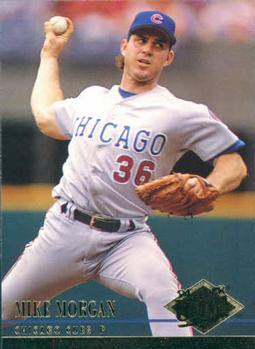
31. Mike Morgan
Mike Morgan may not go down as an incredible baseball player, but he had an incredible career. He was drafted out of high school fourth overall, and he was in the major leagues later that year. He would go on to pitch 22 seasons in the major leagues, although it took him 25 years as he spent some of his early years strictly playing in the minors. Now his numbers were pedestrian for nearly the entirety of his career, but pitching over four separate decades is beyond incredible.

During his time, he pitched for 12 different teams, but the Cubs got more of his time than any other team as he spent five separate seasons with the team. His original run went from 1992-1995 before the Cubs traded him to the St. Louis Cardinals for Todd Zeile.

In 1998, the Cubs were in the hunt, but the trade deadline had come and gone with the Cubs still not solving their pitching issues. At least this time, they were looking to solve for starting pitching instead of relief. Luckily, players could still be traded if they passed through waivers. So the Cubs sent Scott Downs to the Minnesota Twins in exchange for 38-year-old, Mike Morgan. Morgan was having one of his best years as he had a 3.49 ERA in 98 innings as a starter. More incredibly, despite starting 17 games, his record was just 4-2. That level of no-decisions is amazing.

Morgan would start five times for the Cubs down the stretch and put up an ERA of 7.15. The Cubs record in those games? 4-1, somehow. Every game but one of those was decided by a single run. The game that wasn't ended on a 3-run walk-off home run. His best outing was when he pitched six innings and gave up just two runs to the St. Louis Cardinals. It was the only game the Cubs lost. Baseball is weird.

He would move on to the bullpen during the playoffs where he had two scoreless appearances where he was trusted to finish out those games. Yes, they were both losses (they were all losses), but at least Morgan got some time out there. It took him 20 years, but he finally was able to pitch in a playoff game.

Morgan would go on to pitch four more years with the highlight of winning a World Series Championship with the Arizona Diamondbacks in 2001. I guess good things do happen to those who wait.

In case you missed it:
Introduction
#47 - Matt Karchner
#46 - Jose Nieves
#45 - Rodney Myers
#44 - Justin Speier
#43 - Tony Fossas
#42 - Kennie Steenstra
#41 - Chris Haney
#40 - Bob Patterson

#39 - Pedro Valdes

#38 - Derrick White
#37 - Ben Van Ryn
#36 - Terrell Lowery
#35 - Don Wengert

#34 - Kurt Miller

#33 - Jason Maxwell

#32 - Kevin Foster

Wednesday, June 27, 2018

The 47 Best Players from the 1998 Chicago Cubs - #32 Kevin Foster

32. Kevin Foster
This is one where 1998 contributions get a little fuzzy. Since I'm not actually judging based on performance but how they made me feel, it's impossible for me to not include feelings that carried over from past seasons. Kevin Foster, based on 1998, could have arguably been ranked last on this list. Instead, he's much higher, because I really freaking liked Kevin Foster.

Foster was originally drafted by the Montreal Expos as an infielder. He struggled for three years at the plate before the Expos decided to see if he could make it as a pitcher. Although the transition started off a little rough, by his second year on the mound, Foster showed his potential with a  2.74 ERA and over a strikeout per inning in A-ball.

After that, he progressed through the minors, got traded to the Mariners and then to the Phillies who he made a couple appearances for at the end of the the 1993 season and put up a 14.85 ERA. That was enough for the Phillies to trade him to the Cubs in exchange for Shawn Boskie.

In 1994, this trade looked like a massive steal for the Cubs. He came up on June 3rd and threw seven shutout innings against the Expos, who were really freaking good that year. His ERA would never rise above 3.15 and would end that year at 2.89 when the strike cut short the season. He had 8.3 strikeouts per inning, which may not sound too impressive these days but would have eighth in the major leagues if he had enough innings to qualify, just two spots behind a little pitcher from Montreal named Pedro Martinez.

But that would go down as his best season. After that, Foster was plagued with the long ball as his home run rate over doubled the following season, and he would lead the league in home runs allowed. He still had a acceptable 4.51 ERA. The wheels came off in 1996 when he put up an ERA over 6.00, but he bounced back a little in 1997 with a 4.61 ERA.

In 1998, he started the year off in the minor leagues but was called up before a June 9th game to try to help out the bullpen. It did not work out as he gave up two runs in two innings in his first outing. He bounced back for a scoreless outing his second time on the mound, and everything fell apart for him in the third outing as he gave up four hits without recording an out and all four runners would go on to score. The Cubs sent him down to AAA after that, but even there he couldn't put things back together as he had an ERA over 6.00. He would not see the Major Leagues for another three years when he got a brief chance with the Texas Rangers, and then would go on to play a couple years in independent ball before calling it quits.

Unfortunately, the story gets sadder from there. Kevin Foster was diagnosed with renal cancer and passed away in 2008 at the age of 39.

Kevin Foster was a fun guy to watch, and he always flashed just enough that you thought the magic of that 1994 season might come back at any time. In the 1990s, all Cubs fans had was hope, and Foster gave us a reason that a brighter future was attainable. He may have not been the guy in 1998, but he showed enough before that to keep us hanging on to hope for a brighter future, and for that, I will never forget his contributions to the team.

In case you missed it:
Introduction
#47 - Matt Karchner
#46 - Jose Nieves
#45 - Rodney Myers
#44 - Justin Speier
#43 - Tony Fossas
#42 - Kennie Steenstra
#41 - Chris Haney
#40 - Bob Patterson

#39 - Pedro Valdes

#38 - Derrick White
#37 - Ben Van Ryn
#36 - Terrell Lowery
#35 - Don Wengert

#34 - Kurt Miller

#33 - Jason Maxwell

Thursday, June 14, 2018

The 47 Best Players on the 1998 Chicago Cubs - #37 Ben Van Ryn

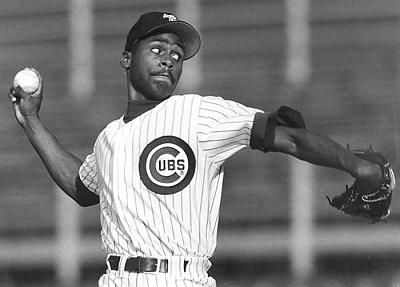
37. Ben Van Ryn
On a per-inning basis, Ben Van Ryn may have been one of the Cubs three best relievers in 1998. Outside of a game in 1996, 1998 was the only season that Van Ryn spent in the major leagues, and even then, he didn't make it the entire year. But at the beginning of 1998, pitching low leverage innings for the Chicago Cubs, Ben Van Ryn was straight fire.

Ben Van Ryn started off the year making eight separate appearances and gave up a total of zero earned runs. It seemed as if no one could score on Van Ryn. Sure, those eight appearances only totaled six innings, and two of those outings ended without him getting a single out, but they were still scoreless.

After going all of March (one game) and most of April, Van Ryn was finally solved by the Los Angeles Dodgers. The Dodgers had already put up nine runs on the collection of Kerry Wood and Amaury Telemaco, so the Cubs turned to Van Ryn to stop the bleeding. In fact, they even subbed Van Ryn in for Sammy Sosa, because Jim Riggleman LOVED double switches. Going through these box scores has truly been an incredible experience to see how many double switches the Cubs made that year. Anyway, Van Ryn in for Sosa, but not even Van Ryn could stop the red hot bats of Todd Zeile, Jose Vizcaino, and Matt Luke. The Dodgers exploded for three runs and ended Van Ryn's scoreless streak.

The Cubs apparently had incredibly high standards for their bullpen as Van Ryn would never pitch for the Cubs again. Just 11 days later, they would trade him to the Padres in exchange for Don Wengert. 24 days after being traded, the Padres released Van Ryn who put up a 10.13 ERA for San Diego. The Blue Jays picked him up but quickly realized that it was a bad idea when he put up a 9.00 ERA. He would never pitch in the major leagues again.

But for the beginning of 1998, Van Ryn was pretty dang good, putting up a 3.38 ERA in eight innings for the Cubs, good enough for the fourth best ERA on the team. BVR? More like DVR, because this guy was must see TV.

In case you missed it:
Introduction
#47 - Matt Karchner
#46 - Jose Nieves
#45 - Rodney Myers
#44 - Justin Speier
#43 - Tony Fossas
#42 - Kennie Steenstra
#41 - Chris Haney
#40 - Bob Patterson

#39 - Pedro Valdes

#38 - Derrick White