Showing posts with label Clutch. Show all posts

Tuesday, August 28, 2018

The 47 Best Players from the 1998 Chicago Cubs - #6 Rod Beck

6. Rod Beck
I would say Rod Beck is the most universally loved player on this list. I mean, who didn't think Rod Beck was one of the coolest players in baseball? Even when he was with the San Francisco Giants, it was always cool to see this biker-looking dude just throwing heat and overwhelming anyone who stood across from him in a batter's box. That's why I was incredibly excited when the Cubs signed Beck before the 1998 season as he was not only super cool, but the Cubs were desperate for a reliable closer.

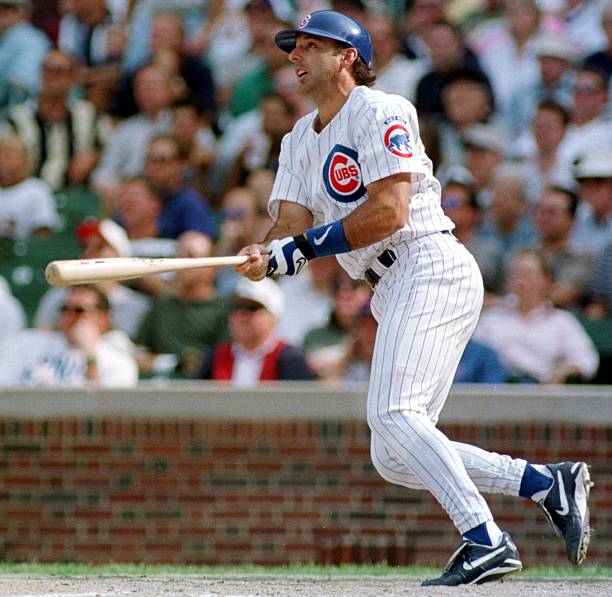
Now Rod Beck had an incredible 1998 season, but nothing is more incredible than doing research and finding out Rod Beck's age during that 1998 season. I know there is a picture at the top of the page, but let's give another one and you guess this man's age:
If you're being kind, you're guessing he's 35 years old as a grizzled closer. If you're being honest, you're guessing 48 and wondering how he got such an authentic looking Cubs jersey for his beer league softball game. This man was somehow only 29 years old in 1998. Good lord, this man did some living. I'm not sure how it's possible, but I love it will all of my heart.

I know I have lamented how bad the Cubs bullpen was in 1998, but this excerpt from August 29 of that year really puts things in perspective.
Pen pals: The Cubs have turned over their entire bullpen from Opening Day, with the exception of Rod Beck. They started out with Beck, Terry Adams, Marc Pisciotta, Amaury Telemaco, Ben VanRyn and Bob Patterson. Adams and Pisciotta are now in Class A Iowa, VanRyn was traded to San Diego for Don Wengert and is now playing at Class A Syracuse, Telemaco was waived and is now a starter with Arizona and Patterson was released and is out of baseball.
Rod Beck was incredibly important to this Cubs team as he was the only one who survived the entire season with the team.

Instead of focusing on Rod Beck's triumphs, I decided to see if my memory served me correctly. And the only thing that I can remember that year is that Rod Beck lived that entire season on the edge. If this man came in with a 10 run lead, he would let nine runs score, load the bases with one out, before inducing a double play to close out the game. Most people would generally assume that their closer giving up runs is a bad thing, but not for Rod Beck. The Cubs record in games that Beck gave up runs was an incredible 16-7* (I added the asterisk as it should have been 17-6, but the Brant Brown game turned a win into a loss). And two of those losses were in games where the Cubs had him go more than one inning. He would put the fans as close to a heart attack as possible, and then just up and decide to end the game, Rod Beck pitched to the score, and no one can convince me otherwise.

Because of that, he was super effective. He finished with a 3.02 ERA with a career-best 51 saves. He also led the league in games played for pitchers as the Cubs used him every chance they could, accumulating 80.1 innings pitched.

Unfortunately, the game that I most remember him for is the game he didn't play in. Game 2 of the NLDS against the Braves, the Cubs held a 1-0 lead going into the bottom of the ninth. Instead of bringing in their trusted closer, they kept Kevin Tapani to finish what he started, and he let Javy Lopez tie the game with one swing of the bat. Beck wouldn't even come in extra innings, and the bullpen lost the game for the team in the tenth.

7.80 ERA for the Cubs the following season before being traded to the Boston Red Sox and putting up a 1.93 ERA down the stretch and following up with two more years of quality work before washing out of baseball.

In 2003, he found himself again with the Cubs but this time it was the Iowa Cubs as he was living in an RV right outside the stadium. He would hang out after the games, not only talking with fans but offering them beers as well. Despite putting up a 0.59 ERA for Iowa, the team in Chicago couldn't find room for him so they allowed him to go to the Padres where he had a 1.78 ERA. But the magic finally wore off in 2004 when he had a 6.38 ERA and decided that would be the end of the road for him in baseball.

Sadly, Rod Beck passed away in 2007 at the age of 38. Cocaine and heroin were found in his home but an official reason for death was never released. Rod Beck may have lived a fast life, but he was also generous to friends and helped get toys for needy children. There wasn't anyone who said a bad thing about him, and that's a legacy to be proud of.

In case you missed it:
Introduction
#47 - Matt Karchner
#46 - Jose Nieves
#45 - Rodney Myers
#44 - Justin Speier
#43 - Tony Fossas
#42 - Kennie Steenstra
#41 - Chris Haney
#40 - Bob Patterson

#39 - Pedro Valdes

#38 - Derrick White
#37 - Ben Van Ryn
#36 - Terrell Lowery
#35 - Don Wengert
#34 - Kurt Miller
#33 - Jason Maxwell
#32 - Kevin Foster
#31 - Mike Morgan
#30 - Felix Heredia 
#29 - Jeff Blauser
#28 - Jason Hardtke
#27 - Dave Stevens
#26 - Manny Alexander
#25 - Marc Pisciotta
#24 - Kevin Orie
#23 - Sandy Martinez
#22 - Terry Adams
#21 - Matt Mieske
#20 - Amaury Telemaco
#19 - Tyler Houston
#18 - Geremi Gonzalez
#17 - Orlando Merced
#16 - Scott Servais
#15 - Mark Clark
#14 - Lance Johnson
#13 - Brant Brown
#12 - Jose Hernandez
#11 - Steve Trachsel
#10 - Henry Rodriguez
#9 - Kevin Tapani

#8 - Mickey Morandini

#7 - Gary Gaetti

Thursday, August 23, 2018

The 47 Best Players from the 1998 Chicago Cubs - #7 Gary Gaetti

7. Gary Gaetti
Is this too high to put a guy who only played a little over a month for the Cubs in 1998? No, because it is my list, and I can do whatever I want. Also, spoiler alert, he's not even the highest ranked guy on this list that was acquired late in the season.

Gary Gaetti had a fascinating career before joining the Cubs. He began his career in Minnesota where he had some great years including a World Series in 1987 and finishing eighth in the AL in OPS and winning a Gold Glove. Then he fell off and things only got worse when he went to California in 1991 as he lost the ability to hit at age 32. Then, he went to Kansas City in 1993, and he regained the ability to hit, even hitting 35 home runs in 1995. He would go to the Cardinals in 1996 and put nearly three seasons of good work for them during his age 37-39 years. But the Cardinals acquired Fernando Tatis at the trade deadline and decided he was their third baseman of the present and future. They waived Gary Gaetti on August 9, and ten days later, when he was free to join any other team, he signed on with the Chicago Cubs.

His impact in 37 games was nothing short of incredible. Not only did he fill in at third base, allowing Jose Hernandez to replace Jeff Blauser at shortstop to eliminate the black holes in the lineup that had been the left side of the infield, but he exceeded every possible expectation during those final six weeks.

The Cubs started him off slowly, as he had just eight at bats in his first five games with the team. In the sixth game, he took John Hudek of the Cincinnati Reds deep for a two run homer, and he would start every game but one from then on. Oh, and that game he didn't start? He hit a pinch-hit home run in his one at bat.

On September 2nd, he continued his Reds killing ways by hitting a two-run homer in the eighth inning to turn a one-run deficit into a one-run lead. He also had a home run against the Brewers that sparked an eight-run comeback in one of my favorite games ever. Oh, and that pinch-hit home run i casually mentioned above? Yeah, that was in the tenth inning off of Trevor Hoffman to give the Cubs a win. This man did not just hit well. He was incredibly clutch as well. In close & late situations, he may have only had 25 at bats, but he managed 13 hits, four doubles, and four homers for a line of .520/.556/1.160. Gary Gaetti fucking ruled.

But there was no more clutch moment than Game 163. In a winner-takes-all, loser-goes-home matchup against the San Francisco Giants, neither team had scored halfway through the game. After a Henry Rodriguez single, Gary Gaetti, facing an 0-2 count, did this:

It's one of the most important home runs in Cubs history. I know nine years isn't some incredible playoff drought, but it's not that the Cubs didn't make the playoffs, it's that they could barely muster up a season of competence during that time. It was that the Cubs had one of the greatest pitchers ever, but he chose to go to Atlanta for less money. These were the true lovable losers, but on this night, Gary Gaetti hit a ball so hard that all Cubs fans felt like champions.

The Cubs resigned him after 1998, but he would only last 1999 with the team as they released him after the season when it was clear that the magic from 1998 had worn off. He would sign with the Red Sox but would only play five games before retiring early in the 2000 season. He played in over 2500 games before it was all said and done. I would say that was one hll of a career, and in 1998, he gave the Cubs one hell of a run. Gary Gaetti owned.

Thursday, February 8, 2018

The 45 Most Important Players to the Chicago Bulls Dynasty - #23 Bobby Hansen

Bobby Hansen
As a fellow former Hawkeye, Bobby Hansen is near and dear to my heart. Bobby Hansen played for Iowa during the Lute Olson days, before Lute headed to Arizona to dominate college basketball. He teamed up with basketball legends such as Ronnie LesterGreg Stokes, and Brad Lohaus...okay, so maybe Iowa doesn't have the greatest basketball tradition. Still, Bobby Hansen's senior year where he scored 15.4 points and had 5.4 rebounds per game were enough to get him drafted in the third round by the Utah Jazz.

After spending his first seven seasons in Utah, he played a year with Sacramento before being traded two days into the season to the Chicago Bulls (along with a pick that would become Corey Williams
) in exchange for future article subject, Dennis Hopson. Fun fact: In Hansen's last game with the Sacramento Kings, they would lose by 62 points to the Golden State Warriors. The Bulls partly acquired Hansen because he had a low salary, so it wouldn't be a big deal if they decided to release him to acquire someone better as a backup guard.

But Bobby Hansen defied the odds and stayed an active member of the roster for the entire season through the playoffs. He played in a total of 66 games, with his best performance coming against the Charlotte Hornets when he went 6-7 from the field with 13 points, 5 assists, 2 rebounds, and three steals. Maybe his most interesting individual contribution on the season is that he shot a putrid 28% from the free throw line. But basketball is a team sport, and the Bulls won their first 14 games that Bobby Hansen played in. In fact, the Bulls would go on to have a 58-8 record when Hansen got playing time but just 9-7 when he did not. I'm not saying the Bulls were only a fringe playoff team without Bobby Hansen, but the stats don't lie.

Although Hansen played sparingly in the early rounds of the playoffs (only four games through the first three rounds), when the Bulls were on the precipice of greatness, they knew to get Hansen on the court. He played in five of six games, including a memorable performance in game six. The Bulls entered the fourth quarter trailing by 15 points, so Phil Jackson rested Michael Jordan to start he period and put in Hansen.

Hansen got the comeback going, nailing his only shot, a three pointer, and adding an assist and a steal. The Bulls would go on a 14-2 run to close the gap, and then Michael Jordan came in to secure a four-point victory to give the Bulls back-to-back championships.

After the season, like many players from these Bulls teams, he called it a career. Bobby Hansen got to go out like a champion. He now is a radio broadcaster for Iowa Hawkeyes basketball and retires with the greatest missed layup in NBA history.

Shop Chicago Bulls Gear at Fanatics.com

Tuesday, January 9, 2018

The 45 Most Important Players to the Chicago Bulls Dynasty - #32 Joe Kleine

Joe Kleine
Do you remember Joe Kleine? Like, I'm an extreme sports fan so I had a little bit of recollection of him, knew he was a big white guy, never thought too much of him beyond that. But Joe Kleine played 15 seasons in the NBA. FIFTEEN. He was the sixth pick in the 1985 NBA Draft. He even started at least one game in every year but his final season. That is one hell of an NBA career, and that is before we touch on the fact that the dude won a Gold Medal in the 1984 Olympics.

Kleine joined the Bulls near the end of his career, for the 1997-98 season. He provided exactly what the Bulls thought he could provide which was extra size on the bench and insurance in case one of their more prominent centers got injured during the year. In that position, it's basically impossible to take the world by storm, but Kleine provided solid, professional work, just like he did for his other 14 seasons in the league.

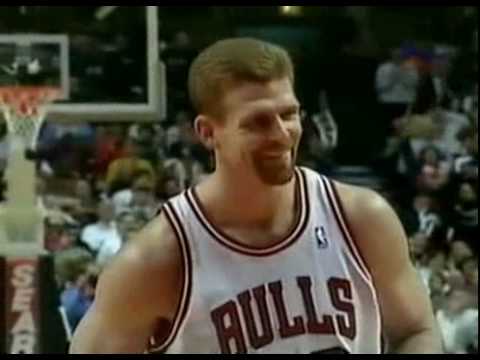
But I can't go any further about Joe Kleine without mentioning his most important contribution to the Bulls final title run: Tacos. But not just any tacos, free tacos. I'm not sure if there is a greater regular season moment in Chicago Bulls history than this.

Look how happy this man is. I can feel his joy through the video. He soaks in every moment. He embraces his role as the Taco King, and he giveth the people what they desire. If you don't love this video, you are incapable of love.

In the playoffs, the bench shrunk and Kleine did not contribute on the court for the Bulls final championship season. He was the best kind of insurance, the kind that you luckily don't have to use.

Kleine may have not lived up to expectations when he was the sixth overall pick in the draft, but I can't imagine calling anyone who spent 15 years in the NBA a disappointment. Joe Kleine filled a role, and he's got a Gold Medal, an NBA Championship ring, and most importantly, FREE TACOS, to prove it.

Shop Chicago Bulls Gear at Fanatics.com

Monday, November 23, 2015

CJ Beathard - Iowa's Craig Krenzel

CJ Beathard (who comes from a football family) is Iowa's Craig Krenzel (whose major was Molecular Genetics). Now I know that most people may think of this as an insult, but it is not meant to be. Craig Krenzel won a National Title. He also started games in the NFL. It wasn't great when he did, but there are lots of people who can't say that, so good for Craig Krenzel. But still, let's get back to the fact that he led his team to a National Title while not being the most physically gifted quarterback in college football. I would very much like CJ Beathard to do the same.

Now I know most people automatically assume that an Ohio State team would have way more talent than an Iowa team, but the 2002 OSU team actually wasn't that crazy talented compared to what the 2015 Iowa Hawkeyes throw out there on the field. Maurice Clarett is the most well known star from that team, but the combination of LeShun Daniels, Jordan Canzeri, Akrum Wadley, and Derrick Mitchell Jr. equal at least one Clarett, and maybe even 1 1/3 Claretts.

On top of that, both teams had stout defenses that could keep them in any game, but much like Iowa, Ohio State was not loaded like a 2002 Miami Hurricanes team, but they undeniably had some talent.

Despite this supporting cast, announcers are quick to give CJ Beathard (who grew up in a football family) as much credit as possible for Iowa's success. Now, don't get it twisted, CJ Beathard deserves a ton of credit, but that running game has been pretty amazing, and Desmond King has been stupid good this year, and honestly deserves Heisman Buzz for what he has done in the secondary this year. Beathard may not be a world beater, but he is a college football team beater, and that's all Iowa needs. He comes through when Iowa needs him most, and, as every ESPN announcer ever would say, "He just wins football games."

Yes, the stats may not be that impressive. Both quarterbacks had about a 60% completion percentage. Krenzel, who majored in Molecular Genetics, ended his year with twelve touchdowns, while Beathard has ten this season. But they both learned to take care of the football, and had very low turnover numbers, which maximized the help they could get from their defense and running game. And speaking of running game, both guys can do some damage with their legs as well, as Krenzel had 368 yards rushing, with Beathard currently 100 yards behind, and that number would be higher if not for a groin injury that Beathard looks to be fully recovered from.

Oh, and if you really like stats, here's a stat for you: 0. That's the number of losses Krenzel had in 2002, and it's how many Beathard has experienced as a starting quarterback. Now, as a logical person, I understand quarterback wins is a stupid stat, but I also know there's one thing stats can't measure.

Intangibles.

Craig Krenzel (Majored in Molecular Genetics) had intangibles oozing out of his butthole. Just watch any game from that season, as the announcers would remind you of this fact every 10-15 seconds. I think the announcers had the special glasses that Roddy Piper wore in They Live, only instead of seeing aliens, they saw rainbows of intangibles coming out of Krenzel's asshole. Nothing better exemplifies these intangibles than this play.

I just want to type out what Brent Musberger said after this touchdown pass. "Craig Krenzel strikes with a minute and a half left! Holy Buckeye! A big time play, as people said all year that sometime, Craig Krenzel would have to win a game, and on fourth and one, he goes 37 yards!"

Craig Krenzel (who majored in Molecular Genetics) single-handedly won the Buckeyes that game by putting up 10 points against Purdue. That stout Purdue defense that gave up 24 points to Western Michigan, 38 points to a 5-7 Illinois team, and 42 points to a 4-8 Michigan State team. Craig Krenzel, and the Ohio State Buckeyes put up 10 points. But that's what stats don't tell you. Because Craig Krenzel didn't beat Purdue with ten points. He beat Purdue with infinity intangible points, as they never really stood a chance. Craig Krenzel has never passed his team to victory, he has only willed his team to victory, and by sheer will, he won a National Title.

Beathard does not have the single defining play up to this point in the year. The one that stands out the most is his Superman touchdown run against Indiana.

All we got from these announcers were, "Dive...Touchdown! What a play by CJ Beathard." It was missing some of the hyperbole. Also, Beathard does not have a fancy major, which hurts his intangibles score. But he does manage to even things up, because CJ Beathard is from a football family. You simply can't teach the lessons he learned growing up, as he just grew up around the sport and knows the game in and out from experiences that started early on in childhood.

Craig Krenzel had intangibles coming out of his butt, and CJ Beathard comes from that same mold. The intangibles propel these men to places that pure stats could never understand. I mentioned the number zero earlier, but there is one number that is even more important. That number is one. It's the number of National Titles Craig Krenzel won; it's the number CJ Beathard hopes to tie after this season.

But Beathard's too worried about winning football games to have time for numbers. It's a quality that you can't put your finger on. I call it intangibles.

Saturday, March 3, 2012

The Greatest Softball Game Ever Played

A few weeks ago, I witnessed history. I saw some of the greatest athletes in the world give it their all in the sport they loved. Then we put down our beers, stopped watching basketball, and headed to the baseball complex to watch my idiot buddies play a game made for idiots. The team was sufficiently buzzed, which made them in perfect condition to play slow-pitch softball.
Now I must make an admission that I am awful at all baseball related activities. It's not something I worry about as I'm pretty great at most other things. If you've read the book Moneyball, I became the team's Paul DePodesta. If you saw the Moneyball movie, I became the team's Peter Brand. If you have not read the book or seen the movie, my main duty was keeping score, but I would still refer to myself as a bench coach. This is usually not a problem, but this game would definitely test my book-keeping skills (I tell you this only so it makes sense that despite not taking the field, I will to the team as our team, and use the we form, because I suffered through the freezing cold that February in the Midwest provides and I deserve at least some credit).

After blowing through our first two opponents, we were confident that we would cruise to the championship as we had won it all two of the last three years. We took the field first as the home team, and our raucous crowd of eight fans cheered on the squad as they stumbled to their positions. Unfortunately, this game did not go like the other games, as this team could hit the ball...and hit the ball...and hit the ball. It also didn't help that our outfielders didn't believe in cutoff men, but it was mostly their hitting that led to them taking a 13-0 lead after the top half of the first.

Luckily, our team rallied back for a total of...three runs. Yep, at the end of one, it was 13-3. Things were not looking good.

The bad guys responded with six more runs, making it 19-3 going into the bottom of the second. This is where Manager/3rd Base Coach, Jay, really took his game to a new level. He gave no inspirational words, in fact, he said nothing to the team at all. He just went out to third base as if his only job was to guide them on the basepaths. This move of ignoring the team only ignited the fire in each and every player, and a crazy thing happened. They started hitting. They started running. And most importantly, they were drinking again. They got back into the game by scoring eight runs, and making it 19-11.

Sure the team was still down eight runs, but it sucked the life out of the visiting dugout. Before the bad guys knew what happened, they produced a scoreless top of the inning, leaving the score at 19-11 going into the bottom half of the third.

The good guys kept clawing back, and put up four more runs in the bottom half of the third to make it 19-15. They had the bad guys right where they wanted them.

But here's the sad tale that nobody wants to tell you. Sometimes, the drunken assholes (good guys) can't beat the team that is sober and seem like decent human beings (bad guys). Sometimes shit hits the fan. The bad guys started spraying line drives all over the field and ended up scoring eight more runs to extend their lead to 27-15. Things were looking bleak and blurry for the good guys.

Jay would not sit idly by with silence this time around. He greeted the team in the dugout and spoke in his regular voice, "Let's go team." Three words. Three simple words. Yet, not even Martin Luther King Jr. could have ever said something so powerful so briefly. "Let's go team." These words did not echo in our heads, but in our hearts. "Let's go team."

And go that team did. Batter after batter, whether spraying a line drive, beating out an infield hit, or drawing a walk, just kept reaching base. Slowly, the lead shrunk, 16, 17, 18 the runs went up. 19, 20, 21, and the hits kept coming. 22, 23, 24, the team cheered with every batter. We didn't know what was going on, but we knew it was magical. 25, 26, 27, and the game was tied. It was pandemonium in the dugout. Grown men were hugging (honestly, this was mostly the alcohol, but the comeback helped). 28, and eventually 29 before the inning ended. Where the bottom of the fourth started as a 27-15 deficit, it ended as a 29-27 lead.

We could have put the nail in the coffin, but errors and miscues led to the bad guys putting up three runs to go up 30-29 going into the bottom half of the last inning.

Still, we had to feel good. In a 30-29 game, and our 2-3-4 hitters starting off the inning, one run didn't seem too difficult. But, like every event in this game, nothing was easy. Our #2 hitter fouled a ball off with two strikes, which counts as a strikeout.

One out.

It shouldn't have mattered. We had our best hitter up, somebody who had something crazy like eight home runs in the tournament, six of them inside the park (Seriously, MLB scouts, contact me. He gave me the right to act as his agent). With his speed, all he had to do was get on base and it was a guaranteed run. He popped it up.

Two outs.

Our cleanup hitter drew a walk. We're still alive.

Then our first basemen, fresh out of his AA meeting, and getting progressively drunker as the day goes on, rips a line drive to the outfield, and both he and the runner on first are chugging around the basepaths (speed was not a strength of this team, so they were not flying around those bases). Still, the crowd went wild as one run crossed the plate and our first basemen stood proudly at third.

Tie ball game. 30-30.

Although the tie was great, the tournament rules stated that extra innings were sudden death, so if we were unable to score a run, we would need to shut the opposing team out in the sixth for a chance to win the game. Really, what we needed was another run.

Our drunkest hitter, D, came up to the plate. This guy has trouble standing, so when you put just a tiny amount of alcohol in him, he becomes a truly decrepit piece of shit. There is nobody I have less confidence in on the team. But luckily, a miracle happened. They intentionally walked him. Our drunkest hitter walked to first, and then to second as they intentionally walked the man after him as well.

Up came our right fielder, and co-captain, Tony. This is a man who tore his MCL in the tournament the year before, because the man simply doesn't know how to not give 110%. This was the moment that every little boy dreams of. Tie game, two outs, bottom of the fifth with the bases loaded in the annual winter slow-pitch softball tournament. And so he came up to the plate, with the bright C on his sweatshirt, ready to make or break the team's hopes of a championship.

The pitcher lobbed one up (they're all lobs in slow-pitch softball) and time seemed to go in slow motion. Tony took a cut at the breaking ball that seemed to hang up there just a little too long. He blasted it into the gap. The outfielders were in hot pursuit of the ball, but they had no chance as it landed between the outfielders and rolled to the fence. One run scores, two runs score, three runs score, and even Tony would circle the bases for an inside-the-park grand slam (as scorekeeper, I am giving him credit for this, even though the game is technically over when that first run crosses the plate).

34-30 was the final score as the entire team rushes the field. The dog pile was pure insanity, and I apologize to the person I stabbed with my scorekeeping pencil. The celebration continued all night long as we ate greasy food, drank cheap beer, and sexually harassed every woman we came in contact with. We partied like kings.

If you wrote that in a script, everyone would say it was too unrealistic to ever be made. This wasn't a Hollywood ending. It was an Iowa ending, because shit gets real in the heartland.