Showing posts with label Prospects. Show all posts

Wednesday, September 5, 2018

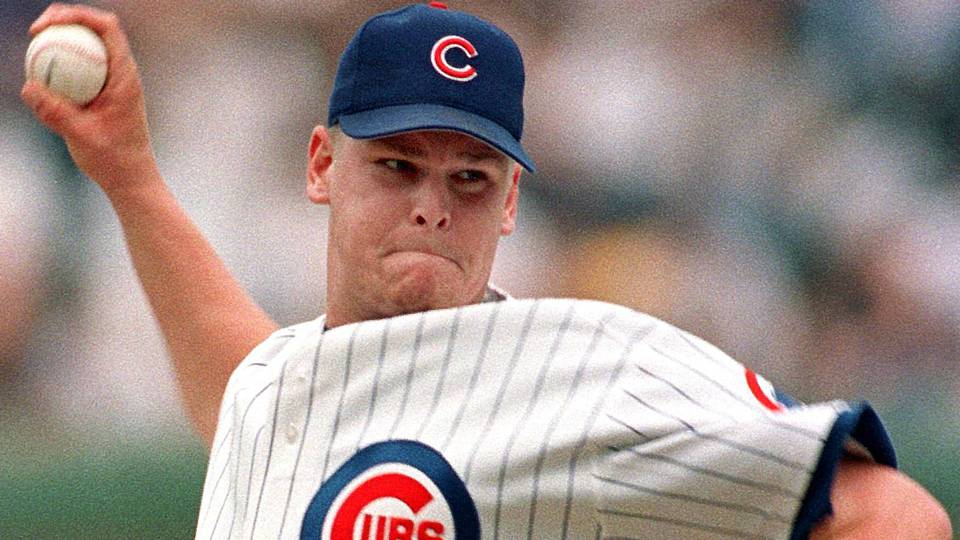
The 47 Best Players from the 1998 Chicago Cubs - #2 Kerry Wood

2. Kerry Wood
Holy shit, Kerry Wood was good. Like, it is not nearly appreciated enough how good Kerry Wood's stuff was as a pitcher. Here's how good he was. Kerry Wood was a SURE THING when he was called up to the major leagues. Nobody doubted that he would be awesome. This was despite the fact that between Double-A and Triple-A the previous year, he had a 4.57 ERA and walked nearly EIGHT batters per nine innings. He most definitely needed some more seasoning in the minor leagues, and the Cubs gave it to him, with a single start in Iowa where he struck out 11 batters in five innings.

Kerry Wood did not come out and set the world on fire immediately. After giving up seven runs in less than two innings, his ERA was sitting at 8.74 after three starts. Of course, he followed that up with his best start so far, going seven innings and giving up just one run against the Cardinals.

Then he faced the Astros on May 6. There's not a whole lot I can say about this game that hasn't been said multiple times before. Here are a couple fun facts. The first eight batters struck out that day as Shane Reynolds also struck out the side in the first inning. Starting in the seventh inning, when Kerry Wood should have been slowing down, he struck out seven straight batters. The Astros heart of their lineup, 3-4-5 hitters, Jeff Bagwell, Jack Howell, and Moises Alou had nine at bats and struck out nine times. It's the greatest game ever pitched as far as I'm concerned as there is a very solid argument that on top of the 20 strikeouts, he also should have had a no hitter. Also, just to prove it wasn't a fluke, Wood struck out 13 Diamondbacks in his next start.

Let's just take a break to watch some gifs, because even if you've seen these 1000 times, they are still mesmerizing.


Poor Derek Bell. With only seeing one batter go down before him, he had no idea what he was in store for, and it showed as he missed so bad that he had to jog forward to avoid face planting on home plate.


It's not just that Jeff Bagwell's knees buckle but the total disdain he has as he walks off on shame that truly makes it beautiful.


Look at poor Dave Clark. He's all confident, getting ready to make good contact with a pitch, and then he realizes that the pitch is diving a foot below his swing plane, but by that point, it's already too late. I mean, just look at that poor man's face.


Brad Ausmus probably made the wise decision to just keep the bat on his shoulders for this one. But most importantly, if you look up at the information box in the upper left corner, you can see that this pitch was so nasty that they gave Wood two strikes for it. That's pretty damn impressive.


When Bill Spiers heard Larry Dierker call his name to go in and pinch hit, do you think he tried to pretend he couldn't hear him? I would have definitely tried that if I was Bill Spiers. He should have stuck two fingers down his throat, started puking, and just not had to deal with this. As for the pitch, it looks like it almost hits Spiers right elbow and also his left hip. It never comes close to hitting Spiers's bat though.


This is the final strikeout of the game. Not only did Derek Bell get made to look silly again, but even Kerry Wood has earned a subdued fist pump to celebrate.

Okay, I guess I did still have a few things to say about that game.

After his two-start, 33 strikeout run, he would continue to dominate, striking out at least 10 batters seven more times. His most impressive outing was August 26, his second-to-last start of the regular season, when he struck out 16 Cincinnati Reds batters in eight innings.

He would go 13-6 with a 3.40 ERA and led the league in strikeouts per nine innings since he had an incredible 233 in 166 innings. His 12.5 beat second-place Curt Schilling by more than 2.5 strikeouts per nine innings. He also won the Rookie of the Year award, barely edging out Todd Helton.

Although Wood did not pitch the final month of the season, he did come back for the playoffs, giving up just one run in five innings, but the bullpen promptly let the Braves blow the game wide open.

Wood didn't make a single appearance the next season as he had to have Tommy John surgery before the 1999 season. It's not too surprising as the 20-year-old eclipsed 100 pitches in 21 of his 26 starts in 1998. In 2000, it looked like he may never reclaim the magic he showed his rookie year as he put up a 4.80 ERA in 137 innings.

But then, 2001-2003, he turned things around, pitching about 200 innings with an ERA in the mid-to-low 3s while striking out over ten batters per nine innings. Unfortunately, it was not made to last as he took a small step back in 2004, and by 2005, he was forced to try a transition to the bullpen.

If you were following the Cubs back then, you probably resigned yourself to the fact that Kerry Wood would never be productive again. No matter what he did, he could not stay healthy long enough to get in a groove to be a reliable member of the pitching staff. Between 2006-2007, he pitched just over 40 innings combined.

But in 2008, he reinvented himself as a successful closer for the team, racking up 34 saves. The Cubs didn't believe the magic was real and allowed him to go to the Indians in 2009, not even making an offer for Wood to stay. he was solid for the Indians in 2009, then struggled with them in 2010 before being traded to the Yankees where he dominated as a setup man for Mariano Rivera, putting up the nicest ERA of 0.69. He came back to the Cubs in 2011 and was effective again in relief. But in 2012, it fell apart, and he would retire later that year.

Kerry Wood is the most exciting pitcher in Cubs history. He's not the best, but Kerry Wood in 1998 was appointment viewing. Considering he struck out 20 guys in his sixth start, every start after, you came in with the thought that it might be possible again. Information about how pitch counts weren't really out there, at least not for me during my early teenage years, so you didn't really care if he was racking up 120 pitches while striking out 13 guys in seven innings. It was just awesome every time you saw somebody massively whiff on a breaking ball. Kerry Wood was the shit.

And somehow, his story is only the second most important from the 1998 Chicago Cubs.

In case you missed it:
Introduction
#47 - Matt Karchner
#46 - Jose Nieves
#45 - Rodney Myers
#44 - Justin Speier
#43 - Tony Fossas
#42 - Kennie Steenstra
#41 - Chris Haney
#40 - Bob Patterson

#39 - Pedro Valdes

#38 - Derrick White
#37 - Ben Van Ryn
#36 - Terrell Lowery
#35 - Don Wengert
#34 - Kurt Miller
#33 - Jason Maxwell
#32 - Kevin Foster
#31 - Mike Morgan
#30 - Felix Heredia 
#29 - Jeff Blauser
#28 - Jason Hardtke
#27 - Dave Stevens
#26 - Manny Alexander
#25 - Marc Pisciotta
#24 - Kevin Orie
#23 - Sandy Martinez
#22 - Terry Adams
#21 - Matt Mieske
#20 - Amaury Telemaco
#19 - Tyler Houston
#18 - Geremi Gonzalez
#17 - Orlando Merced
#16 - Scott Servais
#15 - Mark Clark
#14 - Lance Johnson
#13 - Brant Brown
#12 - Jose Hernandez
#11 - Steve Trachsel
#10 - Henry Rodriguez
#9 - Kevin Tapani
#8 - Mickey Morandini
#7 - Gary Gaetti
#6 - Rod Beck
#5 - Terry Mulholland

#4 - Glenallen Hill

#3 - Mark Grace

Monday, October 30, 2017

How To Fix The NBA Draft and NCAA Basketball

With NCAA Basketball close to getting started and the NBA already under way, the murmurs regarding eligibility in the NBA have come up once again. Should high schoolers be able to go pro? Should a college player have to stay at least two years? Should NCAA players get paid? Well, the last one is a definite yes, but people can't seem to agree on what the best way to decide eligibility as we must protect the precious institutions involved in the NCAA and make it easier for NBA teams to evaluate talent, as yes, sadly those do seem to be the two biggest goals.

Luckily, I have a solution that should make everyone happy, and it is so simple that I'm shocked that I haven't seen it anywhere else.

First off, let's make everybody eligible. And I mean everybody. Any year in college, sure, you're good to go. You just graduated high school? Good to go. But really, there isn't any reason to stop there. If you're a super talented 15-year-old who wants to declare for the NBA draft, we let them. Why not? tennis players, golfers, and gymnasts are all allowed to compete with the best at any age, and there is no reason that we shouldn't allow basketball players the same opportunity.

Obviously, this is an extreme take, but it comes with a caveat that ensures that this will be what is best for the player and the organizations.

Before the draft, the player must declare their lowest draft value. Basically, a superstar high schooler who wants to come out to play pro ball will say that he must be a top-five pick in order for him to go to the league. If he gets drafted in within the first five picks, he goes pro. If not, he goes off to college. Once the sixth pick comes around, he is off the draft board, so there is not even the temptation of him dropping his value after the fact. It works the same way with college athletes, as they set their value, and if they don't get selected within that range, then they just go back to school another year to sharpen their skills. And in the reverse direction, couldn't have LeBron come out after his junior year, possibly even his sophomore year and become the number one pick in the draft. I'm not saying he would have, but he should have been given that opportunity.

The only loser in this situation is the NCAA as college coaches won't know who is going to be a part of their program until it is too late to replace them. Boo-hoo is about the most sympathy I can muster. They'll be fine, and honestly, the NCAA game will probably get better as more current college players will play extra years when they don't reach their perceived value in the draft.

I know my idea of letting 12-year-olds turn pro is slightly controversial, but I am willing to ditch that part in order to get my overall idea in there. Let players name their value. If the NBA doesn't agree, they go back to school. It would absolutely be a win for everyone, and that is why it will never happen.
Iowa Hawkeyes gear at Fanatics.com

Monday, April 24, 2017

The 12 Most Interesting Prospects in the 2017 NFL Draft

The NFL Draft is almost upon us. I touched on the top running backs and quarterbacks last week, so this week, I really just want to point out the most interesting prospects in this draft. Maybe I like them, maybe I don't, and maybe I don't know what to think, but no matter which way you slice it, these are the most interesting names that will hear their name called over the next few days.

Jonathan Allen - Defensive Lineman - Alabama
Allen was a monster for Alabama and was seen as a definite top five pick at the end of the season. Then, at the combine, he basically shit the bed. He seemed to lack any sort of explosiveness in his athletic traits. But then you go back to the tape and it sure looked like he was explosive enough. I understand the concerns, but I am always going to side with the tape over the measurements, so although he isn't my favorite defensive lineman, I still think he's worthy of a very high pick.

Derek Barnett - Defensive End - Tennessee
Barnett had a ton of production in college as he broke Reggie White’s Tennessee sack record. Still, people are hedging their bets on him since they don’t see a great enough athlete to translate everything to the next level. I mean, the way people talked about him, I thought he was going to be Bjoern Werner, just plugging along and getting hustle sacks. But that ain’t Barnett. The guy is explosive, and he has a great feel for pass rushing. I consistently saw him explode off the snap and give offensive linemen a hell of a tough time all day long. Does he have the ceiling of a Myles Garrett? Definitely not, but if I had to bet my money on one guy producing multiple double-digit sack seasons, I’d put it on Barnett.

Zane Gonzalez - Kicker - Arizona State
People laughed last year when Roberto Aguayo went in the second round. And then the season started, and they laughed some more, because Aguayo was terrible at the beginning of the year. But Kicker is a lot like Quarterback, where you really want them to ride the pine for a year to learn the intricacies of the sport. Zane Gonzalez should not go in the second round, but he’ll probably go in the third, and you will laugh. Meanwhile, I’ll be laughing at you, as Gonzalez is basically the Peyton Manning of the kicking game. He’s so cerebral that they let him call his own plays. Yes, that only play is him saying, “Imma kick it,” but it works more often than it doesn’t. Could be the highest scoring player in the draft.

Jaleel Johnson - Defensive Tackle - Iowa
Some people love the tape, others hate the testing numbers. The short of it is that he’s been inconsistent where some days you wouldn’t notice him, and on others, he would seem to take the whole world over. The long of it can be found here.

Chad Kelly - Quarterback - Ole Miss
So I wanted to look at one under the radar quarterback who has been getting some buzz. Initially, I looked at Josh Dobbs, but there was nothing there. He's studying to become a rocket scientist, so I think he'll be fine without football. So after studying a rocket scientist, I figured I would go with the opposite and look at Swag Kelly. I think anybody who comments on a guy's character without having any real access to information is an idiot, but yeah, in the public, there have not been many nice things said about him. But dude can throw a football. He's also pretty damn athletic. His pocket awareness is good, and he does a good job of keeping his eyes down the field, although he doesn't scan the field effectively. Still, considering that nobody is talking about him as any more than a late round flyer or free agent acquisition, I think it'd be a good flyer to take late in the draft. Just doing a quick look at the talent, there is enough to be a second day pick, but considering the character concerns, he'd be a steal late in the draft.

Desmond King - Cornerback - Iowa
I love Desmond King, as you can’t teach this guy’s instincts. Although many are convinced he has to move to safety, I think he has the skills to stay at corner, but you can find everything about King here.

George Kittle - Tight End - Iowa
Kittle is going to drive me crazy, as he didn’t produce much in college, and I know exactly why. Because of a dipshit offensive coordinator, Greg Davis, who refused to utilize his tight ends, despite that being, by far, Iowa’s best receiving threats. It has been a sad trend in Iowa football, as Iowa continually sends tight ends to the pros despite unimpressive production in college. But Kittle is maybe the hottest tight end prospect out there right now. He was incredibly impressive at the combine, and his third best athletic comparison from those numbers is a name very familiar to Hawkeye fans, Dallas Clark. That means the only real question is whether he can block, and I think this play answers that question pretty clearly.
They are still trying to dig that NDSU player out of the turf. If Kittle can stay healthy, he is going to make a team very happy.

Marshon Lattimore - Cornerback - Ohio State
What I saw on the field was very good, but he has a history of hamstring injuries that makes me terrified of taking a high pick on him. Hamstring injuries always seem to recur, and the fact that he's had this many injuries while young does not give me a positive outlook for his future.

Haason Reddick - Defensive Player - Temple
This is a guy who has been shooting up draft boards as he tested off the charts at the combine. When I went to watch the tape, I didn't see anything to get excited about. I saw a guy who was weak at the point of attack, and I'm not totally sure where you put him. He's supposed to be an edge rusher with his athleticism, but I think he will get annihilated by linemen there. These super athletes are never my jam, and sometimes I am very wrong on them, but this isn't a chance that I think is worth taking.

Cam Robinson - Offensive Tackle - Alabama
Cam Robinson was a three-year starter at Alabama. That's not easy to do, because, like, there's a lot of talent at Alabama, so to stand out that early and keep that role is pretty impressive. Still, it seems like people aren't talking about him as a first round pick. I don't think he's Orlando Pace, but in a class that is weak with offensive linemen, you could do worse than Cam Robinson.

Ryan Switzer - Wide Receiver - North Carolina
Draft this man. He’s probably going to fall to the middle rounds, but when watching tape of Mitchell Trubisky, I couldn’t help but fall in love with Switzer along the way. The guy is an ideal wide receiver for the slot, as he has a combination of speed, quickness, and route running that makes him nearly impossible to cover. If you’re looking for a downside, he has alligator arms. Like, they might literally be alligator arms, as his arm length is only 28 inches, which ranks in the zero percentile of all wide receivers, and I’m pretty sure it’s the shortest arms for any prospect ever. Don’t care, Switzer is the shit...zer.

Solomon Thomas - Defensive Lineman - Stanford
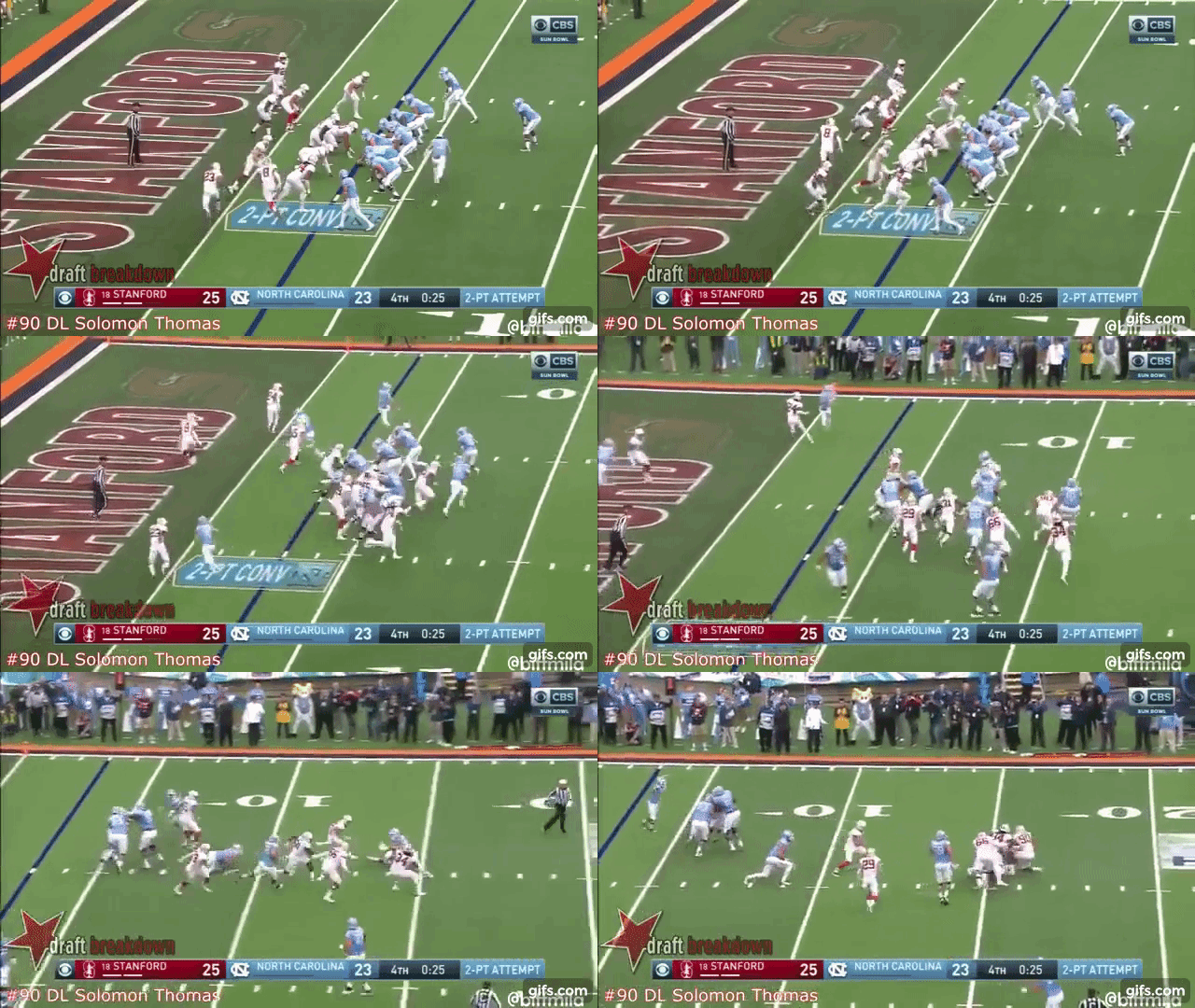
Solomon Thomas is everything you want in a defensive lineman. There is no reason for him to drop out of the top five. Honestly, I could make a pretty compelling case about what I've seen on the field to take him ahead of Myles Garrett. I mean, just look at this play where North Carolina is trying to tie the game on a two-point conversion with 25 seconds left.

Enough said.

Wednesday, April 29, 2015

The Most Overrated Players in the 2015 NFL Draft

Yesterday, I showed my positive side by looking at the most underrated prospects in the 2015 NFL Draft. But with every yin, there must be a balancing yang, and today is that balance of negativity as I look at the most overrated prospects in the upcoming draft.

QB - Bryce Petty - Baylor
Here is my in-depth look at Petty; I've also seen a lot of love for Garrett Grayson, and he was another guy that I just couldn't get behind.

RB - Melvin Gordon - Wisconsin
I don't think Gordon is a bad runing back, but I also don't think he's worthy of a first round pick. The people saying that it's close between Gordon and Gurley have definitely watched those two guys play and are basing that purely off statistics. Melvin Gordon is the best running back to come out of Wisconsin in recent years, but is that really that great of an accomplishment? Every Wisconsin back has put up impressive numbers, but considering the success of Ron Dayne, John Clay, Montee Ball, and James White (although I am still a James White believer), it's tough to say how great of a back Gordon really is. What I'll say is I think he's good, but I'm not sure if he's any better than the second tier of running backs, so I would hold off instead of using a high pick on Gordon.

WR - Sammie Coates - Auburn
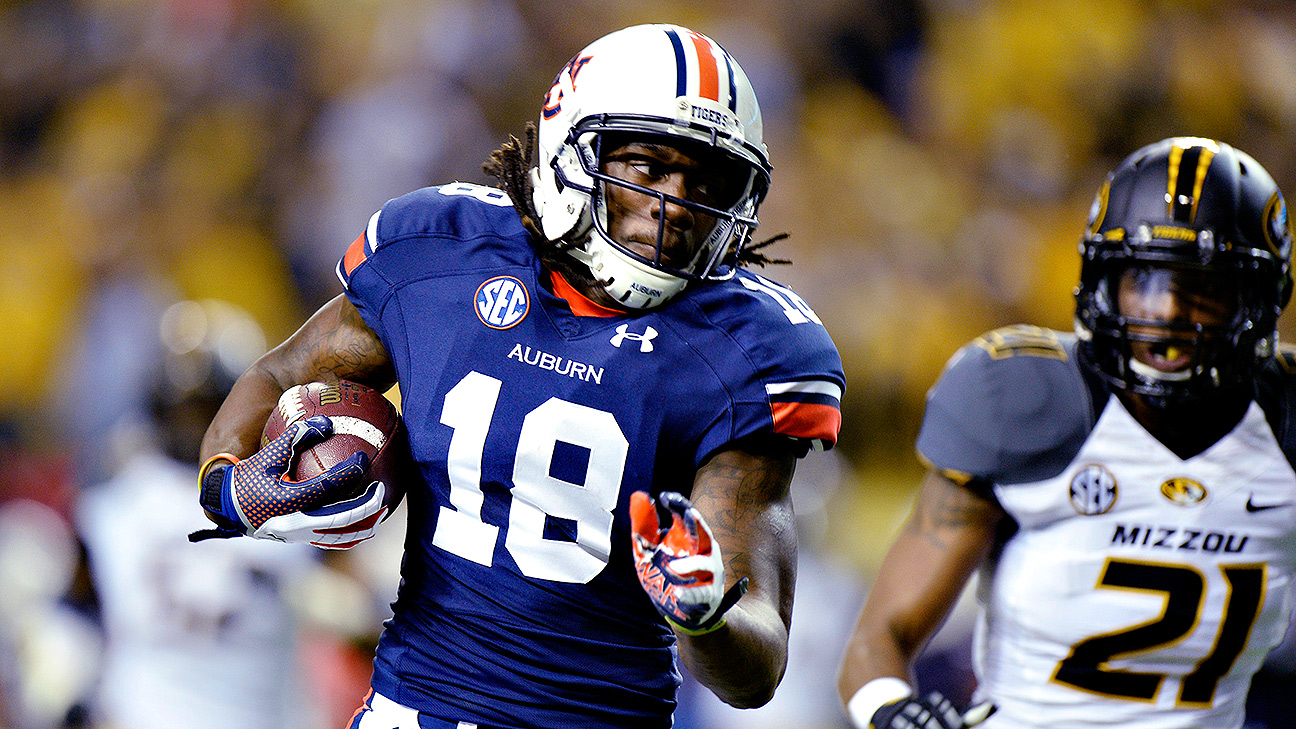
Yes, he's big, fast, and explosive as an athlete. But he can't catch, and that's, like, a really big deal for a wide receiver. There are certain things a coach can help with, but if Coates hasn't learned to reliably track a football and complete a catch at this point in his football career, it probably ain't happenin'.

Edge - Randy Gregory - Nebraska
Honestly, I think Gregory has fallen quite a ways with his failed drug test, but he was seen as a top-5 pick after the season, and I just never saw it. There's not a lot of power in him, so he's going to have to be a speed rusher, and I didn't see enough moves to give most offensive linemen trouble. Rushing is his biggest strength, and I'm not sure if it's enough to make him a full-time pass rusher.

CB - Trae Waynes - Michigan State
I don't get this guy at all. Okay, I guess I get him a little bit, he's very athletic, but there is no way this guy is a shutdown corner. I don't see him as a first round prospect, and I don't see how anybody who watched him against Baylor could think that he is. I have consistently seen receivers get open, and it's not that the receivers are doing anything special, but Waynes isn't physical and doesn't change direction very well. That's not a great combination for a cornerback.

SS - Landon Collins
I am leery of any Alabama safety. Just looking at their success at the NFL level, it seems like they are not a good bet. Safeties are really tough to scout from the sideline view, but there are already plenty of question marks about his ability to react to passes and how he will hold up in coverage. This is a weak draft for safeties, but even with the lack of top-tier talent, a first round pick is likely to be a mistake.

Prospects get hyped for different reasons, but I feel as if these guys hype far outweighs their future potential. Still, best of luck to them. They are all about to be a whole lot richer than me.

Tuesday, April 28, 2015

The Most Underrated Players in the 2015 NFL Draft

With the draft coming up this Thursday, it is a good time to look at the prospects that I like more than most people. Some of these guys aren't the deepest of sleepers, but I do feel they are being underrated by the general public/cornucopia of draft gurus. Ultimately, my goal is that my favorite team, the Chicago Bears, will see this list and follow my recommendations, but I would settle for the Buccaneers taking my recommendations as they are the team I live closest to these days.

QB - Shane Carden - East Carolina
I talked about him extensively here. Honorable mention for Brett Hundley.

RB - Todd Gurley - Georgia
Gurley is the best player in this draft. He needs to have a full recovery from his knee injury, but it looks like things are going well on that end. Now, even had he not injured the knee, he isn't worth the top pick in the draft despite being the best player. Running back is not as important of a position as it used to be, but Gurley is a guaranteed stud in a draft that really doesn't have another one. It would make zero sense for the Bears to draft him, and yet, I would actually be kind of pumped if they did. He's that good.

RB - David Cobb - Minnesota
He got downgraded because of an unimpressive 40 time, but 40 times are pretty worthless when it comes to running backs. This guy is just a good running back. He can punish defenses and grind out yards. People talk about this running back class being loaded and then talk about Gordon and Gurley at the top, but the depth is stupid good. I could have easily mentioned Tevin Coleman, Duke Johnson, David Johnson, Mike Davis, and probably some others. This is a good draft to take a running back.

WR - Stefon Diggs - Maryland
Maryland has had pretty poor quarterback play these last few years, so Diggs was never really given a chance to shine. Still, the skill-set is there, as the guy is smooth in and out of his breaks and knows how to get open and create after the catch. He will make a receiver-needy team very happy with a mid-round pick.

TE - AJ Derby - Arkansas
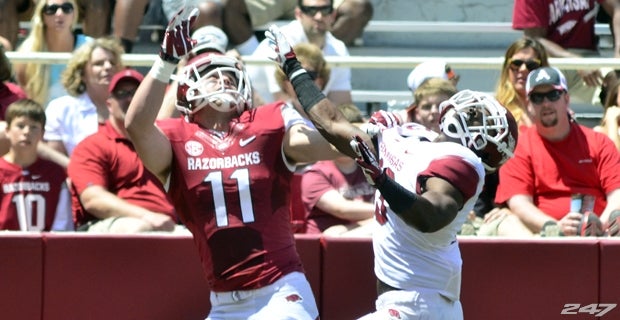
This is mostly a homer pick (former Iowa QB) as I only saw the big highlights from Derby's season, but there was enough there to dream on. He'll probably go undrafted, but the guy has good athleticism, he's big and strong, and he's shown enough potential in running routes and tracking the ball. This is a bet on athleticism, but that's the type of guy that is worth a flyer in the 7th round, or definitely as a free agent.

OT - Jake Fisher - Oregon
Fisher seems to be getting overlooked as a first round option, and I have to say I'd be pretty pumped if my favorite team was able to get him in round two. He's a very athletic lineman, and Oregon's offense ran much smoother when he was healthy. A guy like TJ Clemmings may have a higher ceiling, but Fisher offers a high ceiling with a reasonably high floor as well.

DT - Grady Jarrett - Clemson
Jarrett is a guy that I really like, but is made for the Bears old defense and not the new one. Still, he's a guy with Geno Atkins-level upside as all he did in college was make plays. He's not a nose, but he can cause havoc in the backfield as a three technique DT. He was really overlooked, but it seems like his stock has been rising in the media the past few weeks. We'll see if that carries over to his draft position.

OLB - Vic Beasley - Clemson
I am so ridiculously high on Vic Beasley for this year. I want the Bears to get him at number seven so badly. He'll probably be available, and the Bears will probably pass on him for Randy Gregory or something stupid like that, but man, Vic Beasley is fun to watch, and I'd really enjoy watching him on a team that I cheer for.

ILB - Eric Kendricks - UCLA
I talked about him yesterday, and the point stands. Inside linebackers are underrated right now on the whole, and if you have a chance to get a guy with the floor of a good player and the ceiling of a pro bowler, it is a no brainer to take advantage. This guy has great instincts, and he makes plays, which is the single best skill at translating to the next level.

CB - Senquez Golson - Ole Miss
I'll admit that I haven't done enough studying on later round guys to make any sort of proclamation, but I have heard some good things about Senquez Golson, who I will support since he is my height and had good college production (definitely supporting more for the former than the latter).

Tomorrow, we'll look at the opposite end of the spectrum with the most overrated players in this draft.

Monday, February 16, 2015

Baseball's New Market Inefficiency

In every sport, each person wants his team to find an edge to help them gain an advantage over their competition. Basketball has used analytics, football has found ways to maximize talented square pegs as opposed to just trying to jam them in round holes, and baseball has a new market inefficiency every single year (usually it was the opposite of what was widely believed, as now using resources to build a bullpen is in as the Royals proved). The one thing that seems evident to me is the misuse of pitching prospects.

A saying that still gets used is TINSTAAPP, there is no such thing as a pitching prospect. Obviously, this is an exaggeration, but there is a lot of evidence that lets people know how unwise it is to fall in love with pitching prospects. They blow out their elbows, they never develop a third pitch, their velocity declines mysteriously. There are a ton of things that can go wrong.

Still, pitchers are brought along at nearly the same pace as position players. They are vastly different entities, yet they are widely treated the same. Pitchers' velocities tend to peak early on, many peak before they ever make it to the major leagues, so their hardest pitches are wasted on amateurs and minor leaguers. That is why it is imperative for teams to bring up their pitchers more quickly in order to give themselves an advantage over other teams.

Now do minor league pitchers get better with the instruction they receive there? No doubt about it, but the best coaches are at the highest levels (whether that totally makes sense is a debate for another day), so pushing them quickly will lead to the best possible instruction to maximize their abilities.

You have guys like Mark Prior and Stephen Strasburg who are ready to go straight to the major leagues from the draft. After dominating college to that extent, there is no justification for keeping a guy in the minor leagues just because that's what you do, and these guys were ones who were brought up to the majors incredibly quickly, but even that was a waste. There was no better Strasburg than the one that the Nationals signed. He was as good as he would ever be, but they wasted starts in the minor leagues. Most college first rounders are probably ready to pitch in the major leagues immediately. Could they refine some things? Yes, but their stuff is going to be taking steps back as the years go on, and not everybody gets that much better with command and mental aspects of the game to make up for that. Neither guy had to wait long, but they shouldn't have had to wait at all.

Jose Fernandez is a great example of what I'm proposing. He was brought up after one full year in the minor leagues where he never pitched above High-A. People thought they were crazy for bringing him up so quickly, and all he did was dominate the league to the tune of a 2.19 ERA. There are other guys that are plenty ready to play in the major leagues, not to that extent, but an ERA in the mid 3's could really help out teams that are struggling through their fifth starters.

The whole point of waiting to bring up prospects is to get their best years performing for your team. With position players, delaying their major league debut makes sense as they go through a lot of growing pains and tend to get better as they get deeper into their 20s before declining. With pitchers, it's different. Their raw physical abilities are peaking in their early 20s, so promoting those guys so they are using that stuff against the best competition would give teams a huge advantage. Replacing a fifth starter with a top prospect could add 2-3 wins and be the difference between slipping into the playoffs and winning a World Series or hanging out at home and wondering what could have been. Will they get injured if pushed to the major leagues? Yes, probably, but just about every pitcher gets hurt these days, and the increased danger to arms is negligible compared to the benefits a team could gain from this strategy.

There Is No Such Thing As A Pitching Prospect. It sounds ridiculous, but with an aggressive promotion plan for top level pitchers, TINSTAAPP could become a wonderful reality.

Friday, August 8, 2014

Which Cubs Prospect Is Most Likely To Be a Bust?

The Cubs are currently loaded with hitting prospects as most agree that they have the best farm system in baseball. Still, every Cubs fan seems to be cautiously optimistic about the future. Since these guys have not performed at the big league level, some of them are bound to fail. The odds definitely say that some will not work out, but which ones are going to fail? That is the question that I am going to try to answer by looking at the Cubs top hitting prospects and determining who has the largest, and by process of ranking, smallest, chance to fail.

8. Arismendy Alcantara - He has consistently done well in the minors, and he is already holding his own at the major league level. There are going to be some growing pains, but I feel very confident saying that he will be a valuable major leaguer while under team control.

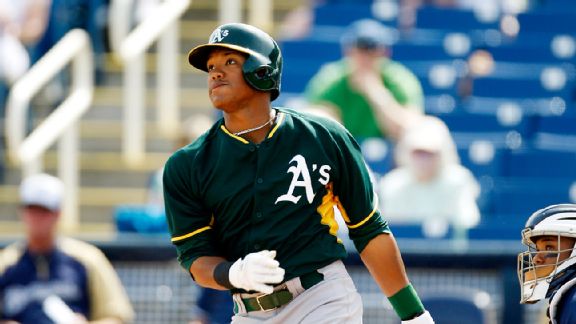
7. Addison Russell - His chance of being a bust seems to be almost entirely tied to his chances of injuries. But considering he came back from a serious hamstring injury and has annihilated the ball in Double-A since being traded to the Cubs, that seems to quell those concerns. He gets extremely positive reviews for his defense, and it seems likely that he will be the shortstop of the future. According to everything that I have seen and heard, it seems very likely that Russell will be an incredibly valuable major leaguer.

6. Jorge Soler - This may seem low on the potential to bust, but I see very little chance in him not becoming a good outfielder. Like Russell, his only real concern is injuries, and he has slightly more concern with that, but when he is healthy, he hits. He has always put up good numbers, and since he's come back from injury, he's put up scary numbers. Soler and Yasiel Puig got signed in the same year, and everybody thought Soler was the better signing. Now, that looks a tad silly right now, but Soler has the potential to be as good as Puig, so I don't think the Cubs are too disappointed about signing him.

5. Billy McKinney - He is not only 20 years old and more than holding his own in High-A. Everything that he has showed so far has shown that he can be an above average regular. Still, he doesn't have much of a track record since he is so young. He has the potential to turn into a better player since he is so young for his current league, but that lack of track record also means that he could end up never making a positive contribution at the big league level.

4. Javier Baez - The fact that he swings at a lot of pitches is worrisome, but the one thing that quells my fear is that he has made adjustments at every level. He struggles early on, but then he makes those necessary tweaks and starts to crush the ball. The strikeouts are still a concern, but the more he proves himself, the more I start to believe he could become an infield playing Vladimir Guerrero. That's the absolute ceiling, but there are few players that can claim to have that sort of potential.

3. Kris Bryant - I love Kris Bryant, because he is totally my type. Big power, strikeout concerns, and questionable defense (my type for pitching is velocity and strikeouts). Try to get me to stop singing the praises of Chris Carter; you can't. Still, this is the line where I start having real concern about bust potential. Let's just throw out some minor league lines of comparable players to see what type of player we can expect Kris Bryant to become.

Bryant - .341/.446/.685 with 36 home runs, 68 walks, and 129 strikeouts while 3.3 years younger than his competition.
Player A - .321/.381/.667 with 43 home runs, 48 walks, and 134 strikeouts while 3 years younger than his competition.
Player B - .317/.387/.670 with 40 home runs, 57 walks, and 169 strikeouts while 2.7 years younger than his competition.

Those players are all pretty similar. Bryant has the advantage in age and walks, but he is on pace to strike out closer to Player B than Player A. Still, there has been some change in strikeout rate overall, so we can give him at least comparable contact rates to either guy. Player A is Brandon Wood, Player B is Dallas McPherson. Don't mind me; I'm going to be vomiting in the corner over the next few hours. Kris Bryant is a potential monster, but he has some flaws in his game. If he struggles at making contact in the minors, it is only going to get tougher at the major league level. Wood and McPherson were two guys who completely fell apart at that level, but despite all that, Kris Bryant is already close to my heart, so despite all this logic, thre is no way I would bet against him (Full disclosure though: I'd still be a little intrigued if the Cubs signed Brandon Wood today. His current line with the Sugar Land Skeeters is .098/.156/.159.).

2. Kyle Schwarber - There is just so very little to go on with Schwarber that he has an incredibly high bust potential. He crushed the ball at his first two stops but is struggling at the High-A level, which is probably an appropriate level for a college player. There is no consensus on whether he can stay behind the plate, and it's too early to really tell how good of a hitter he will become. I just can't imagine anyone being very confident that he will turn into a quality major leaguer. That doesn't mean that he won't; it's just that there is not enough evidence to go on to make a strong bet either way on Schwarber.

1. Albert Almora - This is a pretty obvious number one choice as this is the one hitting prospect who has not set the world on fire this year. He was just okay at High-A, and he has really struggled since moving up to Double-A. I am not a huge fan of walks as the be all, end all for prospects, but it is a preferable thing for a potential leadoff hitter to excel in. He is only 20 years old and in Double-A, so it is not time to throw in the towel. This could be a bump in the road, or it could be a sign of things to come. I am hoping for the former, but like with all of these prospects, only time will tell.

Saturday, July 5, 2014

What the Jeff Samardzija Trade Means for the Cubs Future

Two of the most talked about trade assets this season were Cubs pitchers Jason Hammel and Jeff Samardzija. People speculated what each might bring in a trade to benefit the Cubs' future. Last night, it came as a surprise that the Cubs packaged both of them together in a deal with the Oakland Athletics. The Athletics definitely made it worth their while as they sent over Addison Russell, Dan Straily, Billy McKinney, and a player to be named later.

The player to be named later is supposedly not consequential, so let's not worry about that. The next player to focus on is Billy McKinney who was aggressively pushed to High-A this year and has struggled but has also shown promise. His strikeout and walk ratios look good, and his biggest issue is that very few of his batted balls have fallen in for hits in what is usually a very friendly hitter's league. He was a first round pick in 2013, so he has the potential to be a starting left fielder.

Next up, there is Dan Straily. I'm way too excited about this aspect of the trade, because the Cubs' Pitching Coach, Chris Bosio, has done amazing things with a similar player in Jake Arrieta. Do I expect Straily to match what Arrieta has done this year? No, and he probably won't even come close, but that is more because Arrieta is off-the-chain amazing. Still, I think he could turn into a mid-rotation starter, and I think his worst case scenario is a back-end starter. It's not amazing, but that is a nice piece to get in this deal, as I wouldn't be surprised if he put up better numbers than Jason Hammel for the rest of this season.

Finally, there is uber-prospect, Addison Russell. With a talent like this, nobody will blame you as your heart goes pitter-patter at just the sound of his name. He's a good defensive shortstop with a bat that could make him a generational talent. This is the reason they packaged their pitchers together, as I did not expect the Cubs to get a guy at this level by trading just Samardzija. Still, there is one giant red flag with Russell, and that is that he has missed most of the season after tearing his hamstring. When I think hamstring injuries, I immediately think of Jose Reyes, and that is why this sort of injury terrifies me. It could turn out to be a one-time injury where he fully recovers and sees no other issues, but I can just about guarantee that the Oakland Athletics front office were concerned about its long-term impact, and that was part of the reason they were willing to part with a prospect who has the potential to be a generational talent. 

So what does it mean for the Cubs future? Well, the most likely situation is that it gives the team depth in case some of these prospects don't pan out. Although Alcantara, Almora, Baez, Bryant, Russell, Schwarber, and Soler all have potential to be good-to-great major leaguers, inevitably, some of them are not going to reach their potential. 

If they do all make it, that's a great problem to have. It's not impossible to imagine this offense by 2016:
C - Schwarber
1B - Rizzo
2B - Alcantara
3B - Baez
SS - Russell
LF - Soler
CF - Almora
RF - Bryant

That is the rosiest of outlooks imaginable, but even if only half of those guys live up to their potential, and they put average guys at other positions, it could still be a pretty potent offense. The Cubs front office has done a phenomenal job of acquiring talent to build towards the future. It has not been a quick process, but it has been a thorough one as the Cubs minor league system is absolutely loaded. 

That still leaves the pitching side of things where Cubs fans seem to be worried, but this is an area where the Cubs front office has shown an aptitude for finding hidden gems for cheap. Even with these gems, it still only led to about a #3 starter in cases like Travis Wood, Jason Hammel, and Scott Feldman, which although nice, is not ideal in the playoffs. But the Cubs also acquired Jake Arrieta who has pitched like a legitimate ace this season, and it changes the whole outlook of the future of the rotation with a true #1 leading the way. Also, as I mentioned earlier, Chris Bosio has done a great job as the pitching coach, and if he can keep doing what he's been doing, finding quality pitching might be easier than expected.

And the Cubs also have a trade asset that I have not even mentioned yet in Starlin Castro. After a terrible year last year, he is back to fulfilling his initial promise. Worst case is they need to keep him as prospects don't pan out, but best case is that these prospects do pan out, and the Cubs can get a high end pitching prospect to add to their farm system. It seems unlikely that the Cubs would trade him this season unless they really don't believe in him to continue his performance, because he's signed through 2019, so he would still have incredible trade value two years from now. Javier Baez has not done enough to bump Castro the the outfield, so there is really absolutely no reason for the Cubs to rush to get rid of him unless they get an offer that is too good to pass up.

The Cubs from these last couple years have been the best bad team in baseball. Their record is awful, which definitely makes them a bad team, but their run differential shows that they are far closer to average than to the basement of MLB. Replacing the black holes on offense, filling in the rotation, and strengthening the bullpen don't require Herculean feats, it requires manageable tweaks, and the Cubs have more than enough talent to make that a reality. 

The future is bright, but it is also not imminent. Even with many of their top prospects due to debut in Chicago in the next year, there are going to be growing pains. 2015 is the year to expect a step forward where they can play around .500 ball. But 2016 is the year to expect the leap into being a contender. Be sure to get your shades on by then, because the future will only get brighter from there. 

I can't believe I'm saying this, but, it's good to be a Cubs fan.

Monday, June 30, 2014

Why The Cubs Need To Call Up Kris Bryant This Season

I, like every other Cubs fan who has even a passing interest in the minor league system, is so incredibly excited about the potential of Kris Bryant. He put up video game numbers in Double-A this year and has not slowed down since being promoted to Triple-A. If he continues what he is doing, the Cubs need to call him up this season.

Now a lot of stat savvy people will argue the point that it makes little sense to call him up this season, as the Cubs are not a contender, and they would be wasting a cost-controlled season by calling him up in a year that is a lost cause. When looking at players as assets, this is a decision that makes complete sense. Although those cost-controlled years are assets, the players themselves are actually human beings, and that is why it is important to send a message throughout the organization by calling Bryant up this season.

Now Bryant is bound to cool off somewhat, but if he does anything close to this consistently at Triple-A, then it would be absolutely ridiculous to wait until next June to bring him up to the Majors. Yes, that does give the Cubs another year of his production at below market value, but it also sends a message to the entire organization that player performance will only take you so far, as the front office has already predetermined when the earliest a player's debut can happen.

If I was at a job where I was exceeding all of their wildest fantasies about my performance but was told that it was still going to take a year for me to get a promotion, because the billionaires that run my company can save some money that way, I wouldn't be too thrilled with that decision. I'm also guessing that the people around me who see me busting my ass wouldn't be too thrilled either, as if I can't get promoted, their chance of being promoted any time soon is pretty slim. That is a great way to kill morale and effort.

That is why it is so important to remember that players are people, not assets. The human element changes things. And if Cubs prospects see a guy crush the ball and get rewarded, it will likely have positive psychological benefits for the entire organization. Also, the Cubs are not in the same situation as the Rays or Pirates. They have a shit-ton of money, and they are about to have dump trucks full of cash backed up and deposited in their bank account when they negotiate a new TV deal. If Kris Bryant is as good as people think he is going to be, the Cubs are going to be signing him for a long time. After those arbitration years are over, and the Cubs have to sign him to an 8-year deal as a free agent, is anybody really concerned on whether that covers his age-36 season as opposed to his age-37 season? I kind of doubt it.

The future is bright for the Cubs, and there is no reason the future shouldn't start in 2014 with Kris Bryant being promoted to the big leagues.