Showing posts with label Pitching. Show all posts

Tuesday, July 3, 2018

The 47 Best Players from the 1998 Chicago Cubs - #30 Felix Heredia

30. Felix Heredia
When it comes to Felix Heredia, I can't separate him from the heartbreaking trade that got him here. As I have probably mentioned a couple dozen times by now, the Cubs bullpen was absolutely terrible. At the trade deadline, the Cubs had to do anything they could to make things happen in the bullpen. So they traded one of my favorite Cubs, Kevin Orie (along with Justin Speier) in order to acquire Felix Heredia.

I was heartbroken. I loved Orie, despite him somehow performing worse than the Cubs bullpen did in 1998, I still believed. And to only get Heredia in return? A guy with an abysmal 5.49 ERA? How could the Cubs do this to me?

As bad as I thought the trade was, the Cubs needed to do anything they could to help the bullpen, and Kevin Orie was not going to help that team in 1998. In August, Heredia's first month with the team, he was doing everything he could to make me hate him. On August 27, his ERA rose to 6.97, and I cursed him every time he entered the game.

Somehow, on August 28, he turned things around. His ERA went down to 6.75, then 6.55, 6.35, and it just kept dropping. He had 15 appearances over the next month and didn't allow a single run, dropping his ERA to a totally acceptable 4.08. He even gave the Cubs a scoreless 1/3 of an inning in the playoff elimination game against the Giants. He was the hottest relief arm on the Cubs staff.

So it was no surprise when he came in during Game 1 of the NLDS with a runner on and no outs and the Cubs down by just two runs. He manged to get an out on a failed bunt attempt before walking the next two batters. After the bases were loaded, the Cubs went to trusted relief specialist, Matt Karchner, who promptly gave up a grand slam. The Cubs would not come back to win that game, and Heredia would not pitch again in the playoffs.

Heredia would never relive that September magic but stayed with the Cubs for three more years of painful performances where he recorded 4.85, 4.76, and 6.17 ERAs. The Cubs sent him to the Blue Jays in 2002 in a trade for Alex Gonzalez and managed a 3.61 ERA. Then, he was even better in 2003, putting up a 3.00 ERA for the Reds before being traded to the Yankees and putting up a 1.20 ERA in 15 innings while striking out 2.4 batters per 9 innings.

It rightfully fell apart in 2004 where his ERA was back over 6.00, and then he would pitch just 2.2 innings after that year before bouncing around the minors and various international leagues until 2008 when he retired. Although he came up known as El Gato Flaco, The Skinny Cat, he ended his career with a different nickname, The Run Fairy. He wasn't bad enough to truly earn that nickname, and he was definitely better than this low of a spot on this list, but much like I learned when the Cubs traded away Kevin Orie, life isn't fair sometimes.

In case you missed it:
Introduction
#47 - Matt Karchner
#46 - Jose Nieves
#45 - Rodney Myers
#44 - Justin Speier
#43 - Tony Fossas
#42 - Kennie Steenstra
#41 - Chris Haney
#40 - Bob Patterson

#39 - Pedro Valdes

#38 - Derrick White
#37 - Ben Van Ryn
#36 - Terrell Lowery
#35 - Don Wengert
#34 - Kurt Miller
#33 - Jason Maxwell

#32 - Kevin Foster

#31 - Mike Morgan

Thursday, June 28, 2018

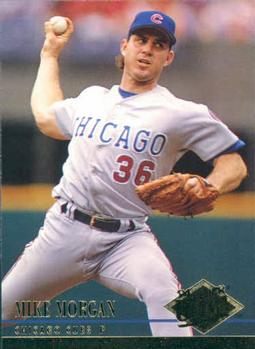
The 47 Best Players from the 1998 Chicago Cubs - #31 Mike Morgan

31. Mike Morgan
Mike Morgan may not go down as an incredible baseball player, but he had an incredible career. He was drafted out of high school fourth overall, and he was in the major leagues later that year. He would go on to pitch 22 seasons in the major leagues, although it took him 25 years as he spent some of his early years strictly playing in the minors. Now his numbers were pedestrian for nearly the entirety of his career, but pitching over four separate decades is beyond incredible.

During his time, he pitched for 12 different teams, but the Cubs got more of his time than any other team as he spent five separate seasons with the team. His original run went from 1992-1995 before the Cubs traded him to the St. Louis Cardinals for Todd Zeile.

In 1998, the Cubs were in the hunt, but the trade deadline had come and gone with the Cubs still not solving their pitching issues. At least this time, they were looking to solve for starting pitching instead of relief. Luckily, players could still be traded if they passed through waivers. So the Cubs sent Scott Downs to the Minnesota Twins in exchange for 38-year-old, Mike Morgan. Morgan was having one of his best years as he had a 3.49 ERA in 98 innings as a starter. More incredibly, despite starting 17 games, his record was just 4-2. That level of no-decisions is amazing.

Morgan would start five times for the Cubs down the stretch and put up an ERA of 7.15. The Cubs record in those games? 4-1, somehow. Every game but one of those was decided by a single run. The game that wasn't ended on a 3-run walk-off home run. His best outing was when he pitched six innings and gave up just two runs to the St. Louis Cardinals. It was the only game the Cubs lost. Baseball is weird.

He would move on to the bullpen during the playoffs where he had two scoreless appearances where he was trusted to finish out those games. Yes, they were both losses (they were all losses), but at least Morgan got some time out there. It took him 20 years, but he finally was able to pitch in a playoff game.

Morgan would go on to pitch four more years with the highlight of winning a World Series Championship with the Arizona Diamondbacks in 2001. I guess good things do happen to those who wait.

In case you missed it:
Introduction
#47 - Matt Karchner
#46 - Jose Nieves
#45 - Rodney Myers
#44 - Justin Speier
#43 - Tony Fossas
#42 - Kennie Steenstra
#41 - Chris Haney
#40 - Bob Patterson

#39 - Pedro Valdes

#38 - Derrick White
#37 - Ben Van Ryn
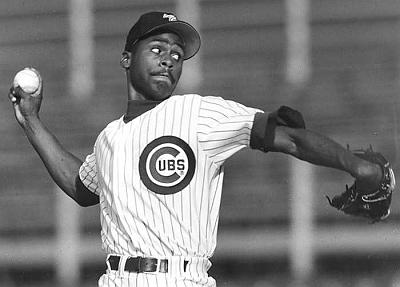
#36 - Terrell Lowery
#35 - Don Wengert

#34 - Kurt Miller

#33 - Jason Maxwell

#32 - Kevin Foster

Wednesday, June 27, 2018

The 47 Best Players from the 1998 Chicago Cubs - #32 Kevin Foster

32. Kevin Foster
This is one where 1998 contributions get a little fuzzy. Since I'm not actually judging based on performance but how they made me feel, it's impossible for me to not include feelings that carried over from past seasons. Kevin Foster, based on 1998, could have arguably been ranked last on this list. Instead, he's much higher, because I really freaking liked Kevin Foster.

Foster was originally drafted by the Montreal Expos as an infielder. He struggled for three years at the plate before the Expos decided to see if he could make it as a pitcher. Although the transition started off a little rough, by his second year on the mound, Foster showed his potential with a  2.74 ERA and over a strikeout per inning in A-ball.

After that, he progressed through the minors, got traded to the Mariners and then to the Phillies who he made a couple appearances for at the end of the the 1993 season and put up a 14.85 ERA. That was enough for the Phillies to trade him to the Cubs in exchange for Shawn Boskie.

In 1994, this trade looked like a massive steal for the Cubs. He came up on June 3rd and threw seven shutout innings against the Expos, who were really freaking good that year. His ERA would never rise above 3.15 and would end that year at 2.89 when the strike cut short the season. He had 8.3 strikeouts per inning, which may not sound too impressive these days but would have eighth in the major leagues if he had enough innings to qualify, just two spots behind a little pitcher from Montreal named Pedro Martinez.

But that would go down as his best season. After that, Foster was plagued with the long ball as his home run rate over doubled the following season, and he would lead the league in home runs allowed. He still had a acceptable 4.51 ERA. The wheels came off in 1996 when he put up an ERA over 6.00, but he bounced back a little in 1997 with a 4.61 ERA.

In 1998, he started the year off in the minor leagues but was called up before a June 9th game to try to help out the bullpen. It did not work out as he gave up two runs in two innings in his first outing. He bounced back for a scoreless outing his second time on the mound, and everything fell apart for him in the third outing as he gave up four hits without recording an out and all four runners would go on to score. The Cubs sent him down to AAA after that, but even there he couldn't put things back together as he had an ERA over 6.00. He would not see the Major Leagues for another three years when he got a brief chance with the Texas Rangers, and then would go on to play a couple years in independent ball before calling it quits.

Unfortunately, the story gets sadder from there. Kevin Foster was diagnosed with renal cancer and passed away in 2008 at the age of 39.

Kevin Foster was a fun guy to watch, and he always flashed just enough that you thought the magic of that 1994 season might come back at any time. In the 1990s, all Cubs fans had was hope, and Foster gave us a reason that a brighter future was attainable. He may have not been the guy in 1998, but he showed enough before that to keep us hanging on to hope for a brighter future, and for that, I will never forget his contributions to the team.

In case you missed it:
Introduction
#47 - Matt Karchner
#46 - Jose Nieves
#45 - Rodney Myers
#44 - Justin Speier
#43 - Tony Fossas
#42 - Kennie Steenstra
#41 - Chris Haney
#40 - Bob Patterson

#39 - Pedro Valdes

#38 - Derrick White
#37 - Ben Van Ryn
#36 - Terrell Lowery
#35 - Don Wengert

#34 - Kurt Miller

#33 - Jason Maxwell

Monday, February 16, 2015

Baseball's New Market Inefficiency

In every sport, each person wants his team to find an edge to help them gain an advantage over their competition. Basketball has used analytics, football has found ways to maximize talented square pegs as opposed to just trying to jam them in round holes, and baseball has a new market inefficiency every single year (usually it was the opposite of what was widely believed, as now using resources to build a bullpen is in as the Royals proved). The one thing that seems evident to me is the misuse of pitching prospects.

A saying that still gets used is TINSTAAPP, there is no such thing as a pitching prospect. Obviously, this is an exaggeration, but there is a lot of evidence that lets people know how unwise it is to fall in love with pitching prospects. They blow out their elbows, they never develop a third pitch, their velocity declines mysteriously. There are a ton of things that can go wrong.

Still, pitchers are brought along at nearly the same pace as position players. They are vastly different entities, yet they are widely treated the same. Pitchers' velocities tend to peak early on, many peak before they ever make it to the major leagues, so their hardest pitches are wasted on amateurs and minor leaguers. That is why it is imperative for teams to bring up their pitchers more quickly in order to give themselves an advantage over other teams.

Now do minor league pitchers get better with the instruction they receive there? No doubt about it, but the best coaches are at the highest levels (whether that totally makes sense is a debate for another day), so pushing them quickly will lead to the best possible instruction to maximize their abilities.

You have guys like Mark Prior and Stephen Strasburg who are ready to go straight to the major leagues from the draft. After dominating college to that extent, there is no justification for keeping a guy in the minor leagues just because that's what you do, and these guys were ones who were brought up to the majors incredibly quickly, but even that was a waste. There was no better Strasburg than the one that the Nationals signed. He was as good as he would ever be, but they wasted starts in the minor leagues. Most college first rounders are probably ready to pitch in the major leagues immediately. Could they refine some things? Yes, but their stuff is going to be taking steps back as the years go on, and not everybody gets that much better with command and mental aspects of the game to make up for that. Neither guy had to wait long, but they shouldn't have had to wait at all.

Jose Fernandez is a great example of what I'm proposing. He was brought up after one full year in the minor leagues where he never pitched above High-A. People thought they were crazy for bringing him up so quickly, and all he did was dominate the league to the tune of a 2.19 ERA. There are other guys that are plenty ready to play in the major leagues, not to that extent, but an ERA in the mid 3's could really help out teams that are struggling through their fifth starters.

The whole point of waiting to bring up prospects is to get their best years performing for your team. With position players, delaying their major league debut makes sense as they go through a lot of growing pains and tend to get better as they get deeper into their 20s before declining. With pitchers, it's different. Their raw physical abilities are peaking in their early 20s, so promoting those guys so they are using that stuff against the best competition would give teams a huge advantage. Replacing a fifth starter with a top prospect could add 2-3 wins and be the difference between slipping into the playoffs and winning a World Series or hanging out at home and wondering what could have been. Will they get injured if pushed to the major leagues? Yes, probably, but just about every pitcher gets hurt these days, and the increased danger to arms is negligible compared to the benefits a team could gain from this strategy.

There Is No Such Thing As A Pitching Prospect. It sounds ridiculous, but with an aggressive promotion plan for top level pitchers, TINSTAAPP could become a wonderful reality.